04:37
University Physics with Modern Physics
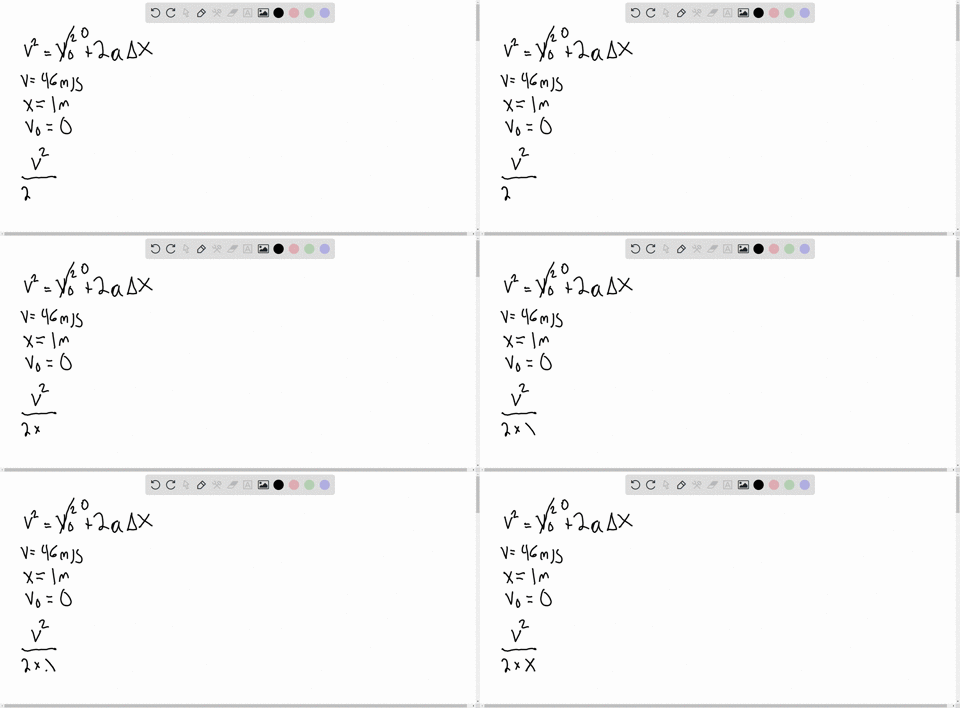
Human Biomechanics. The fastest pitched baseball was measured at 46 $\mathrm{m} / \mathrm{s}$ . Typically, a baseball has a mass of 145 $\mathrm{g}$ . If the pitcher exerted his force (assumed to be horizontal and constant) over a distance of $1.0 \mathrm{m},(\mathrm{a})$ what force did he produce on the ball during this record-setting pitch? (b) Draw free-body diagrams of the ball during the pitch and just after it left the pitcher's hand.