Ethics Challenge: Fraud Detection and Safeguards
Harriet Knox, Ralph Patton, and Marcia Diamond work for a family physician, Dr. Gwen Conrad, who is in private
practice. Dr. Conrad is knowledgeable about office management practices and has segregated the cash receipts
duties as follows. Knox opens the mail and prepares a triplicate list of money received. She sends one copy of the list
to Patton, the cashier, who deposits the receipts daily in the bank. Diamond, the accountant, receives a copy of the
list and posts payments to patient's accounts. About once a month the office clerks have an expensive lunch they
pay for as follows. First Patten endorses a patient's check in Dr. Conrad's name and cashes it at the bank. Know then
destroys the remittance advice accompanying the check. Finally, Diamond post payment to the customer's account
as a miscellaneous credit. The three justify their actions by the relatively low pay and knowledge that Dr. Conrad will
likely never miss the money.
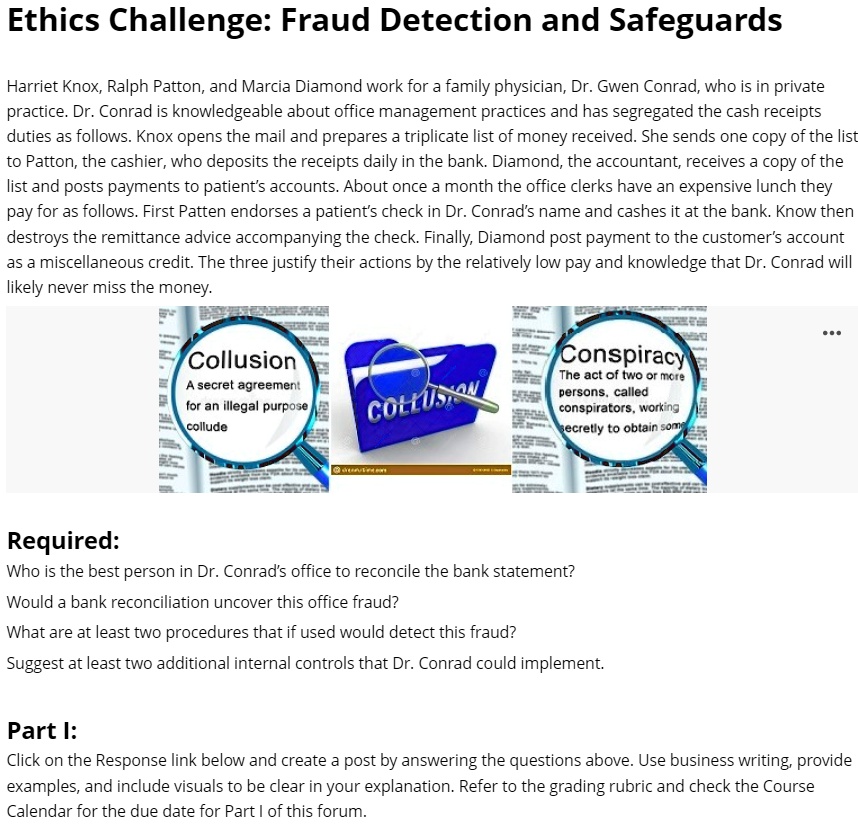
Collusion
A secret agreement
for an illegal purpose
collude
COLLUSION
Conspiracy
The act of two or more
persons, called
conspirators, working
secretly to obtain some
...
Required:
Who is the best person in Dr. Conrad's office to reconcile the bank statement?
Would a bank reconciliation uncover this office fraud?
What are at least two procedures that if used would detect this fraud?
Suggest at least two additional internal controls that Dr. Conrad could implement.
Part I:
Click on the Response link below and create a post by answering the questions above. Use business writing, provide
examples, and include visuals to be clear in your explanation. Refer to the grading rubric and check the Course
Calendar for the due date for Part I of this forum.