pg1 Need help with this question
Activity-Diabetes Dilemma
Learning Objectives
Describe the glycolysis and gluconeogenesis pathways. Explain the problems diabetic patients can have regulating these pathways
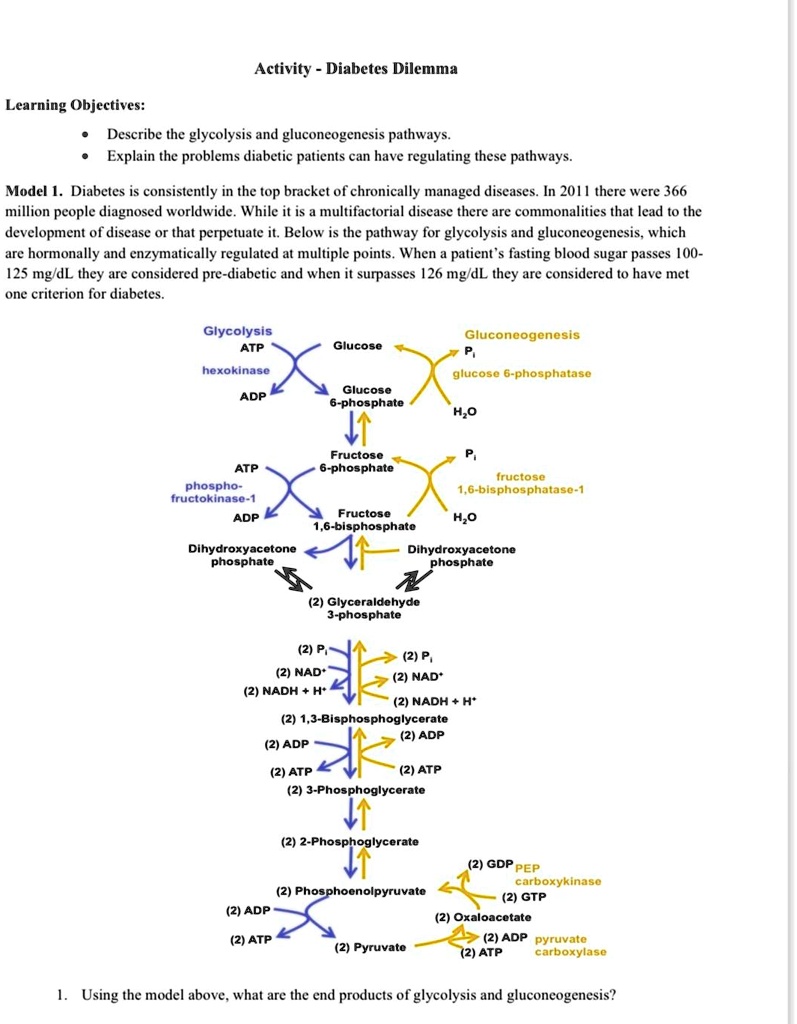
Model 1. Diabetes is consistently in the top bracket of chronically managed diseases.In 20l l there were 366
million people diagnosed worldwide. While it is a multifactorial disease there are commonalities that lead to the development of disease or that perpetuate it. Below is the pathway for glycolysis and gluconeogenesis, which are hormonally and enzymatically regulated at multiple points.When a patient's fasting blood sugar passes 100- 125 mg/dL they are considered pre-diabetic and when it surpasses 126 mg/dL they are considered to have met one criterion for diabetes.
Glycolysis ATP
Gluconeogenesis P
Glucose
hexokinase
glucose 6-phosphatase
Glucose 6-phosphate 11
ADP
HO
Fructose 6-phosphate
P
ATP phospho- fructokinase-1 ADP
fructose
1,6-bisphosphatase-1
Fructose
1,6-bisphosphate
HO
Dihydroxyacetone phosphate
Dihydroxyacetone phosphate
(2Glyceraldehyde 3-phosphate
2P 2NAD 2NADH+H*
>(2)P, 2NAD 2NADH+H (2)1,3-Bisphosphoglycerate 2ADP (2ADP
2ATP 2ATP 23-Phosphoglycerate
(2)2-Phosphoglycerate
2GDP PEP carboxykinase (2)Phosphoenolpyruvate (2GTP 2ADP (2Oxaloacetate (2)ATP 2ADP pyruvate (2) Pyruvate 2ATP carboxylase
1. Using the model above, what are the end products of glycolysis and gluconeogenesis?