Ace - AI Tutor
Ask Our Educators
Textbooks
My Library
Flashcards
Scribe - AI Notes
Notes & Exams
Download App
amanda ortiz

amanda o.

Divider

Questions asked

BEST MATCH

7) Which compound contains both an ester and an aldehyde?

View Answer
divider
BEST MATCH

what is a key advantage of iterative deepening depth first search? it always finds the optimal solution, it explores nodes in a random order, it guarantees completeness, it used less memory compared to breadth-first search

View Answer
divider
BEST MATCH

La corriente a través de la resistencia de 3 Ω es: Ο Α. 9 A OB. 6 A O C. 5 A OD.3 A Ο Ε. 1 A 3 Ω + 9V + 6 V

View Answer
divider
BEST MATCH

Which of the following is (are) an example(s) of people or firms responding to incentives? (x) A significant increase in the income tax rate causes small business operators to request cash payments from buyers instead of credit card or check payments in order to hide income and avoid paying taxes. (y) A college student returns a previously purchased textbook to the campus bookstore for a refund when she discovers that less expensive copies of the book are sold online. (z) A gas station reduces the price of gas when competitors, such as the competing gas station across the street, drop the price of gas that they sell.

View Answer
divider
BEST MATCH

The claims that the costs of addressing climate change are too high: do not withstand scrutiny. are valid because of the falling price of clean energy sources. have been substantiated by economists. are valid because of the direct health care costs from fossil-fuel air pollution.

View Answer
divider
BEST MATCH

10. In terms of annual production, nitric acid, HNO$_3$, is one of the top ten industrial chemicals in North America. It is used in the production of fertilizers such as ammonium nitrate, and explosives such as nitroglycerin. The first step in the manufacture of nitric acid by the Ostwald process is the reaction between ammonia and oxygen, in the presence of a catalyst. The equation for the reaction is as follows. NH$_3$ + O$_2$ $\rightarrow$ NO$_2$ + H$_2$O a) What mass of oxygen is required to completely react with 1.22 kg of ammonia? (4018g) b) What mass of NO$_2$ is produced at the same time? (3295g)

View Answer
divider
BEST MATCH

4. (20 points) Calculate the output signal $y[n]$ at $n = [-5, 5]$ for an LTI system with input $x[n] = u[n]$ and $h[n] = a^n u[-n - 1]$ where $a = 3$.

View Answer
divider
BEST MATCH

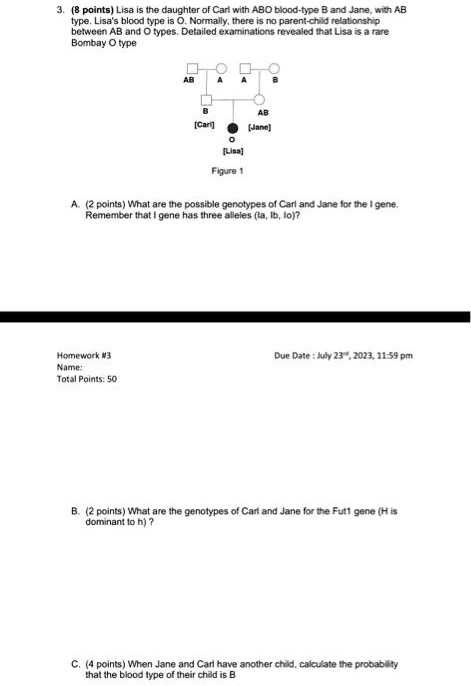
3. (8 points) Lisa is the daughter of Carl with ABO blood-type B and Jane, with AB type. Lisa's blood type is O. Normally, there is no parent-child relationship between AB and O types. Detailed examinations revealed that Lisa is a rare Bombay O type AB [Cari] [Lisa] Figure 1 AB [Jane] A. (2 points) What are the possible genotypes of Carl and Jane for the I gene. Remember that I gene has three alleles ($I^a$, $I^b$, $i$)? Homework #3 Name: Total Points: 50 Due Date: July 23°, 2023, 11:59 pm B. (2 points) What are the genotypes of Carl and Jane for the Fut1 gene (H is dominant to h)? C. (4 points) When Jane and Carl have another child, calculate the probability that the blood type of their child is B
View Answer
divider
BEST MATCH

Texts: Q.2 For questions Q2a to Q2e, consider a submarine with a wall of 14 cm thickness where the heat flow is by conduction within the wall and by convection into the water must be evaluated. The properties of the wall are: Thermal conductivity k = 0.1 [W/mK], Density p = 300 [kg/m^3], Specific heat capacity Cp = 1000 [J/mK]. The finite difference explicit method was chosen for the analysis. The wall is discretized in one dimension in 15 control volumes. Control volumes at the boundaries have a thickness of 0.5 cm, and the ones inside the wall have a thickness of 1 cm each. Nodes for boundary control volumes are placed on the surfaces of the wall, and nodes are placed in the middle of control volumes inside the wall. All nodes are initialized at t = 0 s with a temperature equal to 10°C. Water temperature is shown in the table below. Time (s) Water temperature (°C) 0 10 30 9.7 60 9.4 90 9.1 Assume a convective heat transfer coefficient (h) of 100 [W/m^2K] between the wall and the water. Longwave radiation and shortwave radiation can be neglected. Use a time-step of 30 s. PLEASE TURN OVER ME404 Page 2 of 5 a) Evaluate if the solution for heat conduction is stable given the parameters above. (6 marks) b) Calculate the temperature of the surface node adjacent to the water at t = 30 s and at t = 60 s. (8 marks) c) Calculate the power of the heat flow (in W/m^2) between the surface and the water at t = 30 s. (6 marks) d) Estimate the energy flow in kJ/m^2 between the surface and the water between t = 0 s and t = 30 s. (6 marks) e) Explain why in the first time step all nodes not in contact with fluids will have a temperature equal to 10°C.

View Answer
divider
BEST MATCH

Consider a LTI system with the following transfer function: \frac{Y(s)}{X(s)} = \frac{1}{s^4 + 3s^3 + 2s^2 + 6s + 4} Analyse the stability of this system using Routh-Hurwitz method and answer the following questions: a) How many poles does the transfer function have on the ORHP (Open Right Half-Plane)? b) What happens to the $|y_{natural}(t)|$ as $t \to \infty$? c) Is the system asymptotically stable, marginally stable or unstable? d) Is the system BIBO stable?

View Answer
divider