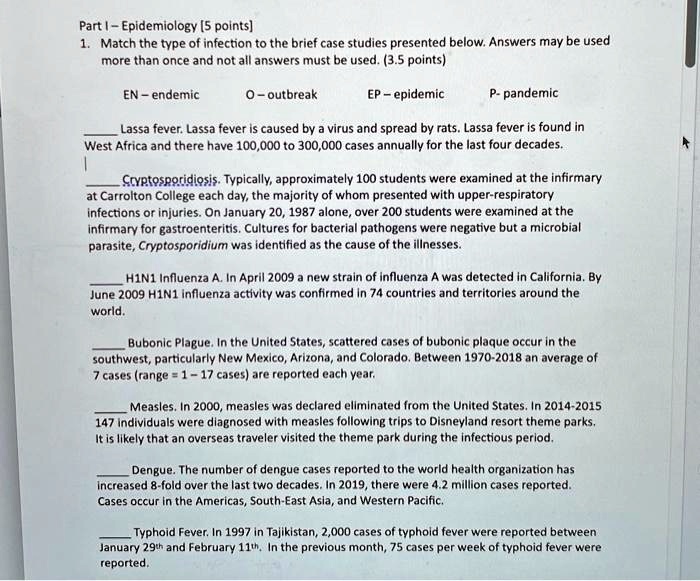
Part 1 - Epidemiology [5 points]
1. Match the type of infection to the brief case studies presented below. Answers may be used more than once and not all answers must be used. (3.5 points)
EN - endemic
O - outbreak
EP - epidemic
P - pandemic
Lassa fever. Lassa fever is caused by a virus and spread by rats. Lassa fever is found in West Africa and there have been 100,000 to 300,000 cases annually for the last four decades.
Cryptosporidiosis. Typically, approximately 100 students were examined at the infirmary at Carrolton College each day, the majority of whom presented with upper-respiratory infections or injuries. On January 20, 1987 alone, over 200 students were examined at the infirmary for gastroenteritis. Cultures for bacterial pathogens were negative but a microbial parasite, Cryptosporidium, was identified as the cause of the illnesses.
H1N1 Influenza A. In April 2009, a new strain of influenza A was detected in California. By June 2009, H1N1 influenza activity was confirmed in 74 countries and territories around the world.
Bubonic Plague. In the United States, scattered cases of bubonic plague occur in the southwest, particularly New Mexico, Arizona, and Colorado. Between 1970-2018, an average of 7 cases (range=1-17 cases) are reported each year.
Measles. In 2000, measles was declared eliminated from the United States. In 2014-2015, 147 individuals were diagnosed with measles following trips to Disneyland resort theme parks. It is likely that an overseas traveler visited the theme park during the infectious period.
Dengue. The number of dengue cases reported to the World Health Organization has increased 8-fold over the last two decades. In 2019, there were 4.2 million cases reported. Cases occur in the Americas, South-East Asia, and Western Pacific.
Typhoid Fever. In 1997 in Tajikistan, 2,000 cases of typhoid fever were reported between January 29th and February 11th. In the previous month, 75 cases per week of typhoid fever were reported.