But I didn't do anything out of the ordinary. I always have those snacks and soda when I'm driving late at night, and it's never been so bad that I had an accident!
"That's what worries me, Frank. How long have you been feeling this high level of stress at work?
"Forabouta year. They have been layingoff people from work and I feel it's only a matter oftime before it'smyturn.
Stacey says that we should buy stock in companies that make candy bars and soda, and I admit that I am putting on a little weight.
"This is not good. Both your high sugar intake plus the work related stress, which can cause excess cortisol secretion, can raise your blood glucose levels. High blood glucose levels like yours suggest diabetes mellitus and I know this problem runs in your family. At this point I usually send my patients to take a glucose tolerance test, but I know that you are going out of town on business this afternoon. How about we set you up for a glucose tolerance test after your trip and in the meantime take it easy on the sugar and try to relax.
"I can do that.
"Also, I think that it would be wise not to drive.
Questions
1. What hormone is responsible for decreasing blood glucose levels?
2. Which gland secretes this hormone?
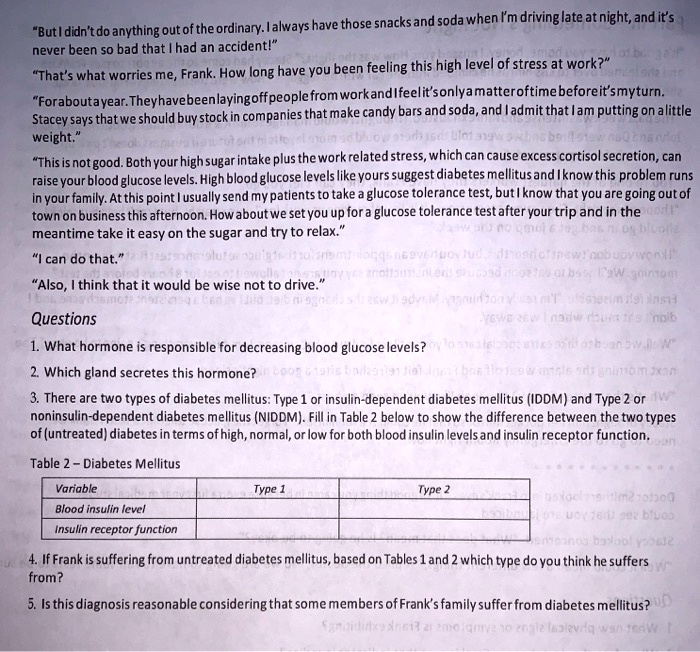
3. There are two types of diabetes mellitus: Type 1 or insulin-dependent diabetes mellitus (IDDM) and Type 2 or noninsulin-dependent diabetes mellitus (NIDDM). Fill in Table 2 below to show the difference between the two types of (untreated) diabetes in terms of high, normal, or low for both blood insulin levels and insulin receptor function.
Table 2 - Diabetes Mellitus
Variable
Blood insulin level
Insulin receptor function
Type 1
Type 2
4. If Frank is suffering from untreated diabetes mellitus, based on Tables 1 and 2 which type do you think he suffers from?
5. Is this diagnosis reasonable considering that some members of Frank's family suffer from diabetes mellitus?