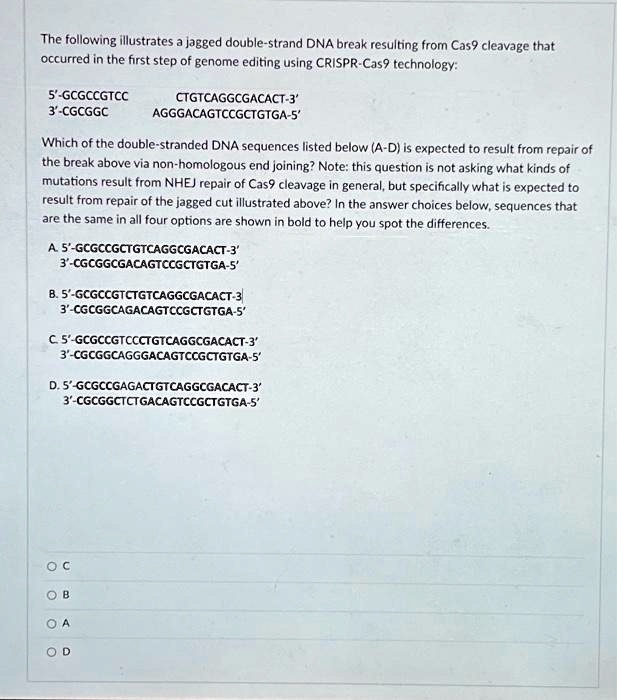
The following illustrates a jagged double-strand DNA break resulting from Cas9 cleavage that
occurred in the first step of genome editing using CRISPR-Cas9 technology:
5'-GCGCCGTCC
3'-CGCGGC
CTGTCAGGCGACACT-3'
AGGGACAGTCCGCTGTGA-5'
Which of the double-stranded DNA sequences listed below (A-D) is expected to result from repair of
the break above via non-homologous end joining? Note: this question is not asking what kinds of
mutations result from NHEJ repair of Cas9 cleavage in general, but specifically what is expected to
result from repair of the jagged cut illustrated above? In the answer choices below, sequences that
are the same in all four options are shown in bold to help you spot the differences.
A. 5'-GCGCCGCTGTCAGGCGACACT-3'
3'-CGCGGCGACAGTCCGCTGTGA-5'
B. 5'-GCGCCGTCTGTCAGGCGACACT-3
3'-CGCGGCAGACAGTCCGCTGTGA-5'
C. 5'-GCGCCGTCCCTGTCAGGCGACACT-3'
3'-CGCGGCAGGGACAGTCCGCTGTGA-5'
D. 5'-GCGCCGAGACTGTCAGGCGACACT-3'
3'-CGCGGCTCTGACAGTCCGCTGTGA-5'
OC
OB
OA
OD