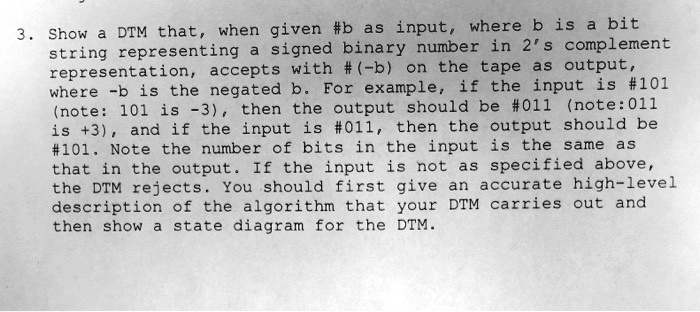
3. Show a DTM that, when given #b as input, where b is a bit string representing a signed binary number in 2's complement representation, accepts with #(?b) on the tape as output, where ?b is the negated b. For example, if the input is #101 (note: 101 is ?3), then the output should be #011 (note: 011 is +3), and if the input is #011, then the output should be #101. Note the number of bits in the input is the same as that in the output. If the input is not as specified above, the DTM rejects. You should first give an accurate high-level description of the algorithm that your DTM carries out and then show a state diagram for the DTM.