Ace - AI Tutor
Ask Our Educators
Textbooks
My Library
Flashcards
Scribe - AI Notes
Notes & Exams
Download App
brian woodward

brian w.

Divider

Questions asked

BEST MATCH

Questions 1 to 8 are based on the following problem: Use wagedata1.sav. wagedata1.sav is a dataset that is located in our class in Webcourses. Perform an independent-sample t-test in SPSS to determine if there is a significant difference in hourly salary (Variable: Hourly Salary- ‘hourwage’) between positions (Variable 'Position'- Nurse Type: Hospital, Office). Use α = .01 The dependent variable is The independent variable and the levels of the independent variable are: Which of the following statements is TRUE Group of answer choices This is a one-tailed test because we want to determine whether there are differences in hourly salary between the positions This is a one-tailed test because we are interested in whether the salary is greater or lower in one of the positions relative to the other This is a two-tailed test because we want to determine whether there are differences in hourly salary between the positions This is a two-tailed test because we are interested in whether the salary is greater or lower in one of the positions relative to the other Your null hypothesis in words is Group of answer choices The average salary of hospital nurses is significantly different from the average salary of office nurses The average salary of hospital nurses is significantly greater than the average salary of office nurses The average salary of hospital nurses is not significantly different from the average salary of office nurses The average salary of hospital nurses is significantly lower than the average salary of office nurses Your alternative hypothesis in symbols is Note: µ1 = Office Nurses; µ2 = Hospital Nurses Group of answer choices H1:M=M2 H1: µ1=µ2 H1: M1≠M2 H1: µ1≠µ2 H1: µ ≠ 20.68 H1: µ1 ≤ µ2 H1: µ1 > µ2 The t-statistic is Note: If it is a decimal number with two or more than two places, leave only two decimal places after the decimal point and do not round The p-value is: Your decision is Group of answer choices Reject the null hypothesis because the p-value is less than the alpha level Reject the null hypothesis because the p value is greater than the alpha level Fail to reject the null hypothesis because the p value is less than the alpha level Fail to reject the null hypothesis because the p-value is greater than the alpha level

View Answer
divider
BEST MATCH

The story of Nick Leeson and the collapse of Barings Bask is offen used an everyle at 2 å›› behavioral ethics. Leeson was manager on the trading foor of the Singmore intermetred small loss on Leeson's watch. Leeson did not with to lose Mis reputation for elability hid the loss. Leeson attempted to make back the loss through specifyine triding batt led to even bigger losses, which again were hidden He Vept dowling whis betw in attempt to get out from under the losses. His unethical behavior is atributatien to tur psychological tendency known as which of the following? Loss aversion. Obedience to authority. Overconfidence bias. Incrementalism.

View Answer
divider
BEST MATCH

Oxidation H of Mn in MnO_(4)^(-) =+7 Oxidation \# of Mn in $MnO_4^-$

View Answer
divider
BEST MATCH

Find [Hg21] in a 0.010 M solution of KIO3 saturated with Hg2(IO3)2(s).

View Answer
divider
BEST MATCH

Explain why distilled water is not appropriate for the 'bluing' of haematoxylin, and suggest an alternative solution that is more appropriate for this process.

View Answer
divider
BEST MATCH

In the following parts, we will use the follow two definitions. For $A \subset \mathbb{R}$, we define $f(A) := \{f(a) : a \in A\}$. For $B \subset \mathbb{R}$, we define $f^{-1}(B) := \{x \in \mathbb{R} : f(x) \in B\}$. Note that $f(A)$ and $f^{-1}(B)$ are both sets. (c) Show that $\forall a \in \mathbb{R}, \forall \epsilon > 0, \exists \delta > 0$ such that $f((a-\delta, a+\delta)) \subset (f(a)-\epsilon, f(a)+\epsilon)$ is equivalent to the definition of $f$ is continuous everywhere.

View Answer
divider
BEST MATCH

\frac{d^2s}{dt^2} - 4s = 4e^{2t} \text{ where } t = 0, s = 0 \text{ and } \frac{ds}{dt} = 10

View Answer
divider
BEST MATCH

In exercises 29-33 answer true or false and give an explanation. 29. The dot product of any vector with the zero vector is zero. 30. If $u, v \in \mathbb{R}^n$ and $u \cdot v = 0$ then either $u = 0_n$ or $v = 0_n$. 31. If $u, v$ and $w$ are in $\mathbb{R}^n$ and $u \cdot v = u \cdot w$ then $v = u$. 32. If $u$ and $v$ are non-zero vectors and $u \cdot v = 0$ then the angle between $u$ and $v$ is $\frac{\pi}{2}$. 33. The following holds for any three vectors $u, v, w$ in $\mathbb{R}^n$: $(u \cdot v) \cdot w = u \cdot (v \cdot w)$.

View Answer
divider
BEST MATCH

A phase-shift oscillator is to oscillate at 1.25 krps. If C is given to be 0.1 µF and the feedback resistance RF = 2.18 M?, then the values of R and R? are: R1 RF C Vo C C R R R a. R = 1.75 k? and R? = 75.2 k? b. R = 2.35 k? and R? = 70.2 k? c. R = 3.27 k? and R? = 75.2 k? d. R = 5.27 k? and R? = 55.2 k?

View Answer
divider
BEST MATCH

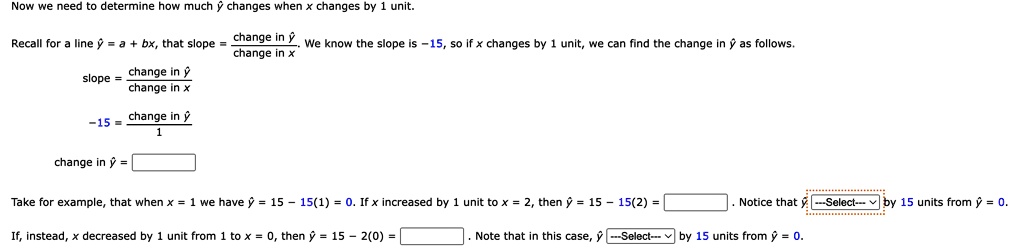
Now we need to determine how much ? changes when x changes by 1 unit. Recall for a line ? = a + bx, that slope = change in ? / change in x. We know the slope is -15, so if x changes by 1 unit, we can find the change in ? as follows. slope = change in ? / change in x -15 = change in ? / 1 change in ? = Take for example, that when x = 1 we have ? = 15 - 15(1) = 0. If x increased by 1 unit to x = 2, then ? = 15 - 15(2) = . Notice that ? ---Select--- by 15 units from ? = 0. If, instead, x decreased by 1 unit from 1 to x = 0, then ? = 15 - 2(0) = . Note that in this case, ? ---Select--- by 15 units from ? = 0.
View Answer
divider