1. Explain the concept of maximum power point tracking when applied to photovoltaic generation, and
when applied to wind energy generation. Include in your answer any parallels that you can note
between voltage and current (photovoltaic generation) and torque and speed (wind generation) in the
two systems, and how can they be used to assist in tracking the maximum power point?
2. Modern multi-MW wind turbines typically use one of two main types of power generation system.
Draw the block diagrams of each of the two systems, state the full names of each (not the acronyms)
and describe briefly the difference between the two systems in terms of the power capacity of the
power conversion systems used in each of the two types. Also make brief comments about the
functionality of each of the two systems including: variable speed range, ability to tolerate faults on
the network, and the controllability of the generator-side system with fault.
$I_{ph}$
$i_d$
$i_p$
$R_s$
$i_{pv}$ +
$R_p$
$V_{pv}$
-
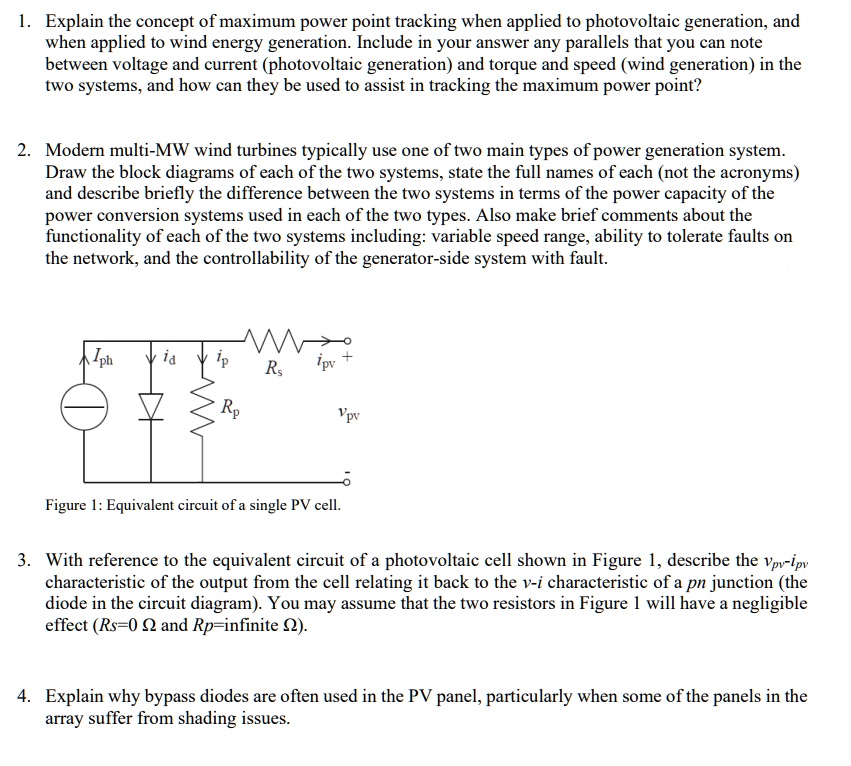
Figure 1: Equivalent circuit of a single PV cell.
3. With reference to the equivalent circuit of a photovoltaic cell shown in Figure 1, describe the $V_{pv}$-$i_{pv}$
characteristic of the output from the cell relating it back to the $v$-$i$ characteristic of a $pn$ junction (the
diode in the circuit diagram). You may assume that the two resistors in Figure 1 will have a negligible
effect ($R_s$=0 ? and $R_p$=infinite ?).
4. Explain why bypass diodes are often used in the PV panel, particularly when some of the panels in the
array suffer from shading issues.