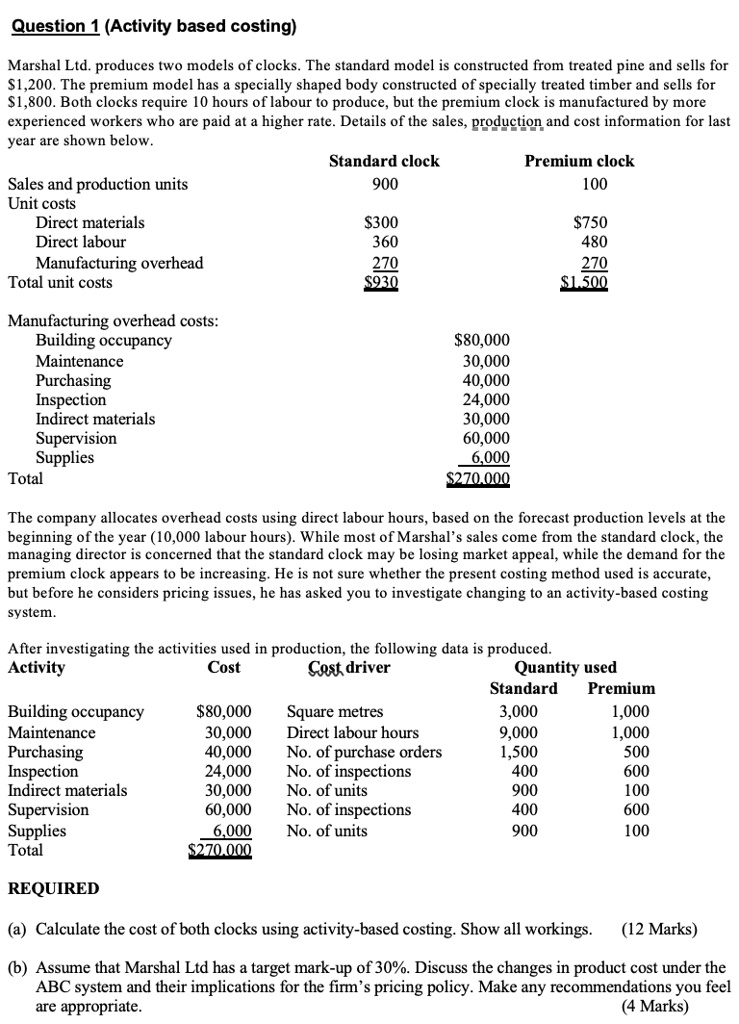
Marshal Ltd. produces two models of clocks. The standard model is constructed from treated pine and sells for $1,200. The premium model has a specially shaped body constructed of specially treated timber and sells for $1,800. Both clocks require 10 hours of labor to produce, but the premium clock is manufactured by more experienced workers who are paid at a higher rate. Details of the sales, production, and cost information for last year are shown below.
Standard clock Premium clock
Sales and production units 900 100
Unit costs
Direct materials $300 $750
Direct labor 360 480
Manufacturing overhead 270 270
Total unit costs $930 $1,500
Manufacturing overhead costs:
Building occupancy $80,000
Maintenance $30,000
Purchasing $40,000
Inspection $24,000
Indirect materials $30,000
Supervision $60,000
Supplies $6,000
Total $270,000
The company allocates overhead costs using direct labor hours, based on the forecast production levels at the beginning of the year (10,000 labor hours). While most of Marshal's sales come from the standard clock, the managing director is concerned that the standard clock may be losing market appeal, while the demand for the premium clock appears to be increasing. He is not sure whether the present costing method used is accurate, but before he considers pricing issues, he has asked you to investigate changing to an activity-based costing system.
After investigating the activities used in production, the following data is produced.
Activity Cost Cost driver Quantity used Standard Premium
Building occupancy $80,000 Square meters 3,000 1,000
Maintenance $30,000 Direct labor hours 9,000 1,000
Purchasing $40,000 No. of purchase orders 1,500 500
Inspection $24,000 No. of inspections 400 600
Indirect materials $30,000 No. of units 900 100
Supervision $60,000 No. of inspections 400 600
Supplies $6,000 No. of units 900 100
Total $270,000
REQUIRED
(a) Calculate the cost of both clocks using activity-based costing. Show all workings (12 Marks)
(b) Assume that Marshal Ltd has a target mark-up of 30%. Discuss the changes in product cost under the ABC system and their implications for the firm's pricing policy. Make any recommendations you feel are appropriate. (4 Marks)