Ace - AI Tutor
Ask Our Educators
Textbooks
My Library
Flashcards
Scribe - AI Notes
Notes & Exams
Download App
charles vega

charles v.

Divider

Questions asked

BEST MATCH

False Question 10 (Mandatory) (10 points) The four cardinal signs of inflammation are redness, swelling, pain, and heat. True False Submit Quiz 5 of 10 questions saved

View Answer
divider
BEST MATCH

3. How do deviations from Raoult's Law illustrate the importance of activity coefficients in solution thermodynamics? - What is the significance of the Lewis-Randall rule in the context of fugacity and activity coefficients? - Explain how binary interaction parameters influence the calculation of activity coefficients in models like NRTL and Wilson. - Describe the use of excess properties in understanding the non-ideality of solutions.

View Answer
divider
BEST MATCH

Decide which of the two given functions is linear and find its equation. X 0 3 6 10 15 f(x) 0 3 11 17 24 g(x) -1 8 17 29 44

View Answer
divider
BEST MATCH

Viruses can vary with respect to all of the following characteristics except A) the presence or absence of a capsid B) the type of host cell it can infect C) single- or double-stranded nucleic acids D) DNA or RNA as the genetic material E) the presence or absence of an envelope

View Answer
divider
BEST MATCH

1. Answer the following: (a) What is Bernoulli random variable? (b) Describe a real-life example when you observe sample mean. (c) Describe a real-life example when you observe sample proportion. (d) State the central limit theorem (CLT). (e) What is implied about a random sample? (f) What is the rule of thumb of normality for the sampling distribution of sample mean? (g) What is the rule of thumb of normality for the sampling distribution of sample proportion?

View Answer
divider
BEST MATCH

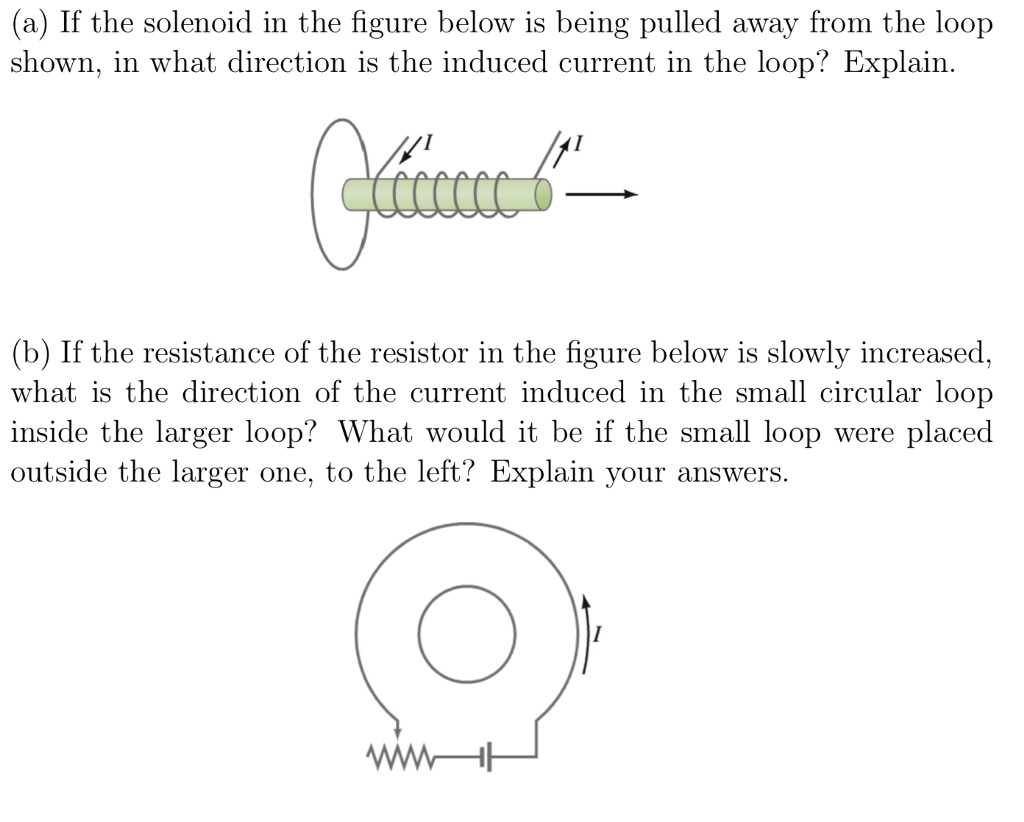
(a) If the solenoid in the figure below is being pulled away from the loop shown, in what direction is the induced current in the loop? Explain. (b) If the resistance of the resistor in the figure below is slowly increased, what is the direction of the current induced in the small circular loop inside the larger loop? What would it be if the small loop were placed outside the larger one, to the left? Explain your answers.
View Answer
divider
BEST MATCH

Consider a process described by the transfer function: $G_p(s) = \frac{5e^{-2s}}{(4s+1)}$ The transfer function of the valve is $G_v(s) = 1/(s+1)$. All other devices in the system are fast and have unity gain. Assume that the delay can be approximated by a first order Taylor series. 1. Determine the maximum gain and critical frequency by using Routh array. 2. Draw the root locus plot for a proportional controller by using the 4 rules for drawing the root locus approximately. Show your work for each rule used. 3. Use the root locus plot to compute the approximate critical frequency and maximum gain. Compare your results with your solution to Part (1) 4. Derive the equation for a controller by using the direct synthesis approach. Check if the controller that you derived can be converted to a PID controller. 5. Design an IMC controller and the corresponding classical PID feedback controller. 6. Compute the exact ultimate gain (no approximation made in various transfer functions), and the critical frequency for this process under proportional feedback control. 7. Compute the values of the parameters for a PI controller by using the ultimate gain and the ultimate period information. 8. Draw the approximate Bode diagram to the graph paper supplied. 9. Compute the critical frequency and maximum gain from the Bode diagram and compare with your results in Part (6).

View Answer
divider
BEST MATCH

la cantidad de estudiantes en una formación de 18 filas en 24 columnas

View Answer
divider
BEST MATCH

1. MATHis a parallelogram. Identify the condition that applies to each given statement. Choose from the conditions given below and write the letter of your answer before the item number. Refer to the figure. A. A quadrilateral is a parallelogram if its opposite sides are congruent. B. A quadrilateral is a parallelogram if its opposite angles are congruent. C. A quadrilateral is parallelogram if any two consecutive angles are supplementary. D. A quadrilateral is parallelogram if its diagonals bisect each other. E. A quadrilateral is parallelogram if a pair of opposite sides is parallel and congruent. F. A quadrilateral is a parallelogram its diagonal divides the parallelogram into two congruent triangles. 1. $m\angle HMA + m\angle MAT = 180^\circ$ 2. $ME \cong ET$ and $HE \cong EA$ 3. $MA \cong HT$ and $MA \parallel HT$ 4. $MA \cong HT$ and $MH \cong AT$ 5. $\angle MHT \cong \angle MAT$

View Answer
divider
BEST MATCH

When the following linear relation is expressed in the form y = mx + b, what is the value of m?

View Answer
divider