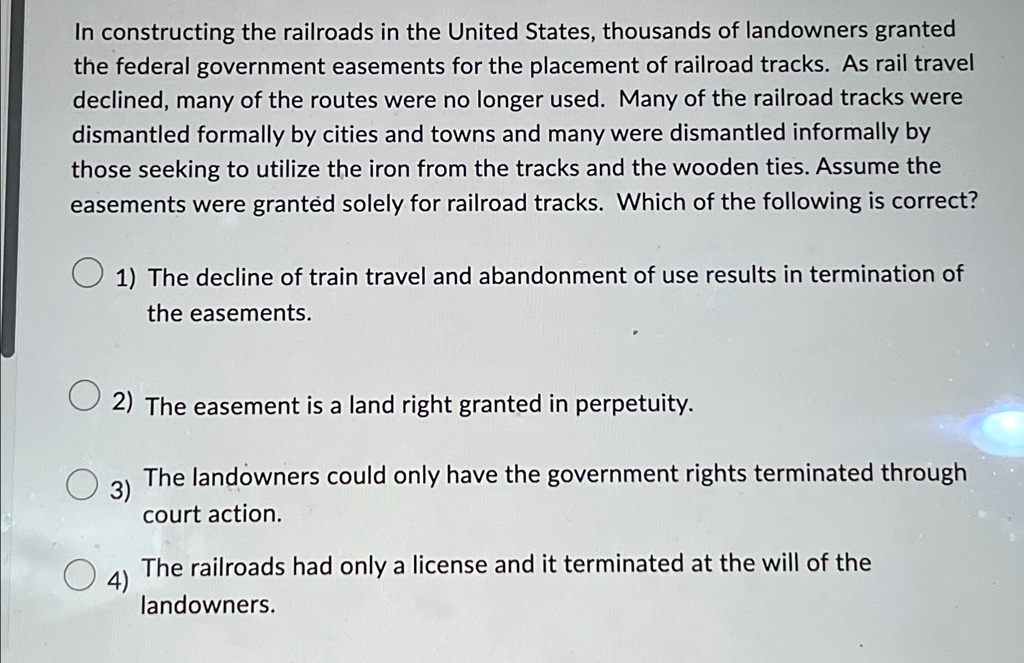
In constructing the railroads in the United States, thousands of landowners granted
the federal government easements for the placement of railroad tracks. As rail travel
declined, many of the routes were no longer used. Many of the railroad tracks were
dismantled formally by cities and towns and many were dismantled informally by
those seeking to utilize the iron from the tracks and the wooden ties. Assume the
easements were granted solely for railroad tracks. Which of the following is correct?
1) The decline of train travel and abandonment of use results in termination of
the easements.
2) The easement is a land right granted in perpetuity.
3) The landowners could only have the government rights terminated through
court action.
4) The railroads had only a license and it terminated at the will of the
landowners.