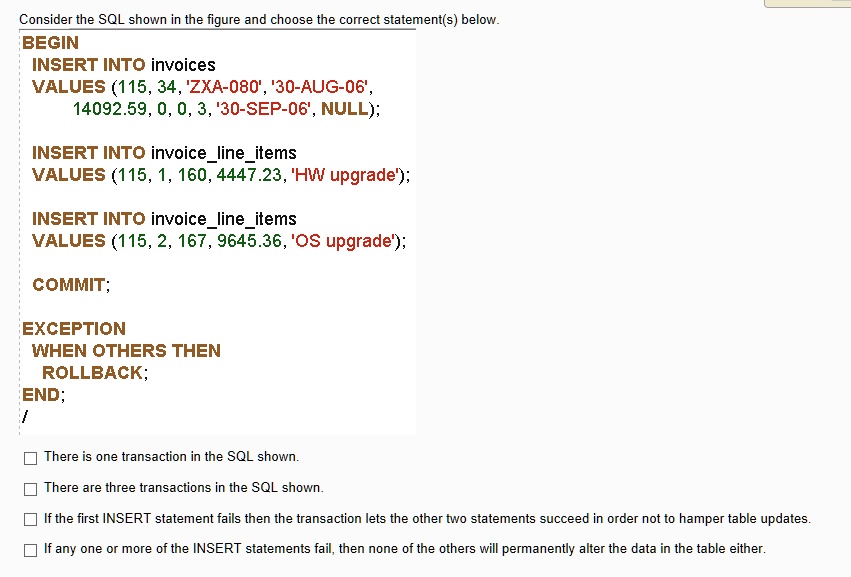
Consider the SQL shown in the figure and choose the correct statement(s) below.
BEGIN
INSERT INTO invoices
VALUES (115, 34, 'ZXA-080', '30-AUG-06',
14092.59, 0, 0, 3, '30-SEP-06', NULL);
INSERT INTO invoice_line_items
VALUES (115, 1, 160, 4447.23, 'HW upgrade');
INSERT INTO invoice_line_items
VALUES (115, 2, 167, 9645.36, 'OS upgrade');
COMMIT;
EXCEPTION
WHEN OTHERS THEN
ROLLBACK;
END;
There is one transaction in the SQL shown.
There are three transactions in the SQL shown.
If the first INSERT statement fails then the transaction lets the other two statements succeed in order not to hamper table updates.
If any one or more of the INSERT statements fail, then none of the others will permanently alter the data in the table either.