A protein found in the blood's plasma that is converted to fibrin to help form a blood clot
Drugs that interfere with one or more steps in the blood-clotting process that either reduce or prevent new clots from forming, or prevent existing clots from getting larger
Anticoagulant drugs that reduce clot formation by increasing the protein antithrombin III
Drugs that convert plasminogen to the enzyme plasmin, which degrades or breaks down fibrin clots, fibrinogen, and other plasma proteins; used especially for lysis (dissolving) of thrombi
Anticoagulant drugs that interfere with blood clotting by reducing the amount of vitamin K available to help the liver form clotting factors
Drugs that prevent clotting events in a patient who might be having reduced blood circulation to the heart before a myocardial infarction (heart attack)
A protein formed from fibrinogen that is a netlike substance in the blood with the function of trapping blood cells and platelets to form the matrix, or frame, of a clot during the clotting process
Drugs that use enzymes to dissolve the fibrin in a clot; also known as thrombolytics or "clot busters"
Anticoagulant drugs that prevent the formation of blood clots by interfering with the activity of the enzyme thrombin (factor II)
Drugs that prevent platelets from clumping together (aggregating), which then interferes with blood clotting within arteries
Products used to provide additional iron that is needed for producing hemoglobin and restoring body stores of iron
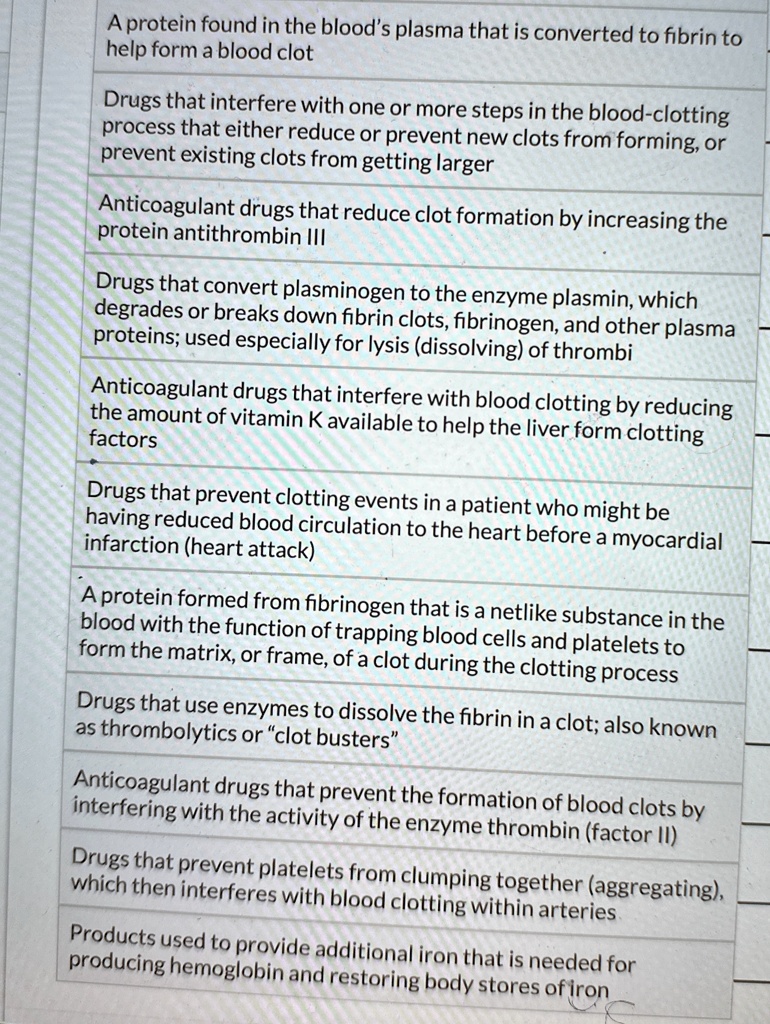
A protein found in the blood's plasma that is converted to fibrin to help form a blood clot
Drugs that interfere with one or more steps in the blood-clotting process that either reduce or prevent new clots from forming, or prevent existing clots from getting larger
Anticoagulant drugs that reduce clot formation by increasing the protein antithrombin III
Drugs that convert plasminogen to the enzyme plasmin, which degrades or breaks down fibrin clots, fibrinogen, and other plasma proteins; used especially for lysis (dissolving) of thrombi
Anticoagulant drugs that interfere with blood clotting by reducing the amount of vitamin K available to help the liver form clotting factors
Drugs that prevent clotting events in a patient who might be having reduced blood circulation to the heart before a myocardial infarction (heart attack)
A protein formed from fibrinogen that is a netlike substance in the blood with the function of trapping blood cells and platelets to form the matrix, or frame, of a clot during the clotting process
Drugs that use enzymes to dissolve the fibrin in a clot; also known as thrombolytics or "clot busters"
Anticoagulant drugs that prevent the formation of blood clots by interfering with the activity of the enzyme thrombin (factor II)
Drugs that prevent platelets from clumping together (aggregating), which then interferes with blood clotting within arteries
Products used to provide additional iron that is needed for producing hemoglobin and restoring body stores of iron