Questions asked
is a technique for promoting the frequency of desirable conducts and decreasing the incidence of unwanted ones. Multiple Choice Genetic modification Posttranslational modification Behavior modification Functional modification
The graph of y = tan(x) has vertical asymptotes at: - multiples of π - multiples of π/2 - odd multiples of π/2 - even multiples of π/2 The graph of y = tan(x) has vertical asymptotes at: - multiples of π - multiples of π/2 - odd multiples of π/2 - even multiples of π/2
Find the midpoint M of the line segment joining the points C=(-8,-3) and D=(2,3).
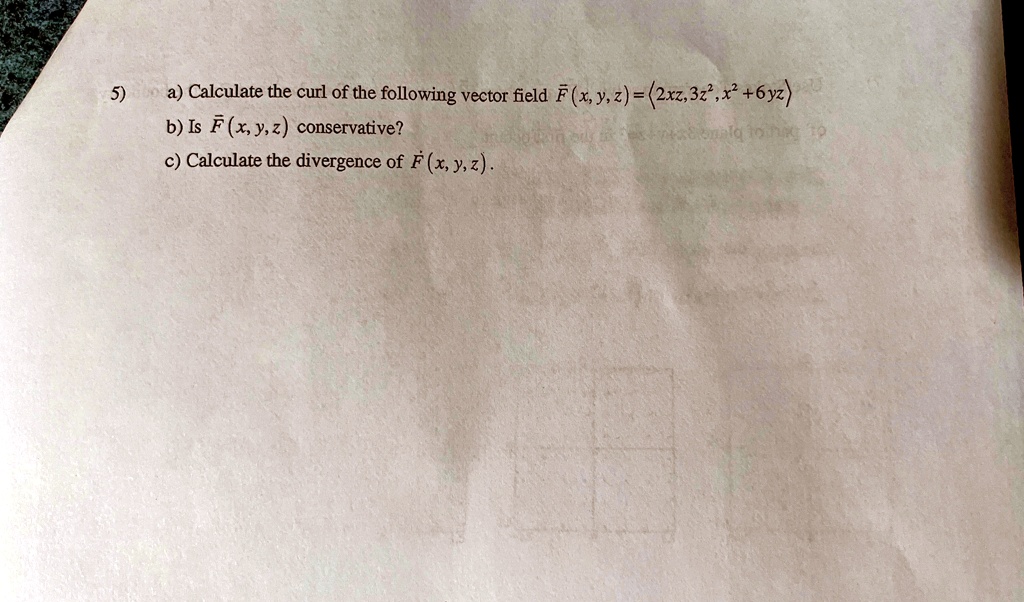
a) Calculate the curl of the following vector field \(\vec{F}(x, y, z) = (2xz, 3z^2, x^2 + 6yz)\) 5) b) Is \(\vec{F}(x, y, z)\) conservative? c) Calculate the divergence of \(\vec{F}(x, y, z)\).
A plate type fuel element is illustrated below. $T_{\infty}$ $T_{\infty}$ x=0 y The fuel element has volumetric heat generation rate q"(x,y,z) = q"_0 cosh(\frac{cx}{S}) cos(\frac{\pi z}{H_c}) a) Develop an expression for the linear heat rate at any axial location b) Develop an expression for the heat flux at the coolant/plate interface at any axial location c) Develop an expression for the total heat generated in the plate
Statement: Consider the velocity sine wave: v = v_0 sin(2\pi t/T) with a period of T = 0.5 seconds, amplitude of v_0 = 10 cm/s, and duration of 4 seconds. with a period of T = 0.5 seconds, amplitude of v_0 = 10 cm/s, and duration of 4 seconds. For the velocity sine wave, develop a program that numerically computes via the Trapezoidal rule the displacement at a specific value of time. The user should input the time in which to compute the displacement and program should then output the results with three decimal places. When computing displacement the ndarray t should be defined with \Delta t = 0.01 seconds. For example, with the input: 0.25 the program should output: 1.589 cm
Find a linear function h, given h(7) = -26 and h(-4) = 29. Then find h(8). h(x) = (Type an expression using x as the variable. Simplify your answer.) h(8) = (Simplify your answer.)
Question 5 An ideal op amp can amplify all frequencies from DC to 1 MHz and beyond with an infinite gain. True False Moving to another question will save this response.
Chapter 16, Problem 16.065 ? Incorrect. Use the supernode technique to find $I_o$ in the circuit in the figure below. $-j1 \Omega$ $12\angle 0^\circ V$ $2 \Omega$ $17 \Omega$ $2 \Omega$ $j2 \Omega$ $-j2 \Omega$ $I_o$ (a) Find the real part of $I_o$. (b) Find the imaginary part of $I_o$. (a) -2.216 A (b) 1.18 A
: Your parents lend the company $10,000 cash in exchange for a two-year, 6% note payable. Interest and the principal are repayable at maturity how do i report this on a journey