Real wages, nominal wages, and unexpected changes in the price level
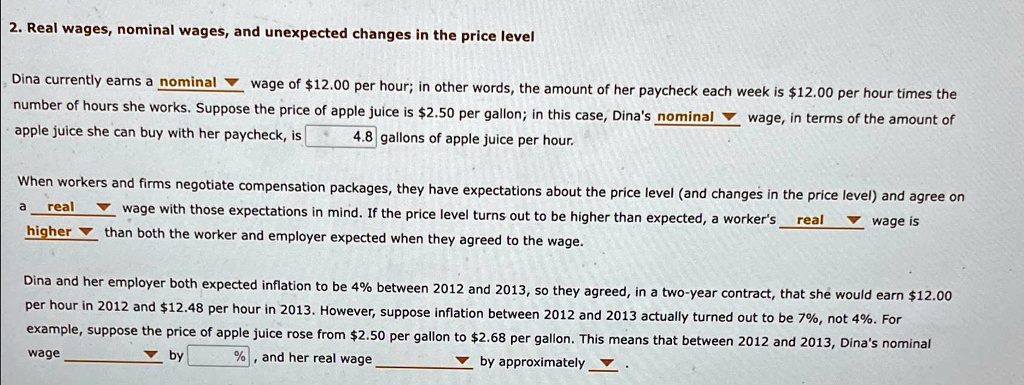
Dina currently earns a nominal wage of $12.00 per hour; in other words, the amount of her paycheck each week is $12.00 per hour times the number of hours she works. Suppose the price of apple juice is $2.50 per gallon; in this case, Dina's nominal wage, in terms of the amount of apple juice she can buy with her paycheck, is 4.8 gallons of apple juice per hour.
When workers and firms negotiate compensation packages, they have expectations about the price level (and changes in the price level) and agree on real wage with those expectations in mind. If the price level turns out to be higher than expected, a worker's real wage is higher than both the worker and employer expected when they agreed to the wage.
Dina and her employer both expected inflation to be 4% between 2012 and 2013, so they agreed, in a two-year contract, that she would earn $12.00 per hour in 2012 and $12.48 per hour in 2013. However, suppose inflation between 2012 and 2013 actually turned out to be 7%, not 4%. For example, suppose the price of apple juice rose from $2.50 per gallon to $2.68 per gallon. This means that between 2012 and 2013, Dina's nominal wage increased by % and her real wage by approximately.