Ace - AI Tutor
Ask Our Educators
Textbooks
My Library
Flashcards
Scribe - AI Notes
Notes & Exams
Download App
elizabeth day

elizabeth d.

Divider

Questions asked

BEST MATCH

Identify a practice problem related to your future practice role for which a master's-prepared nurse could advocate for an evidence-based practice (EBP) change. obesity

View Answer
divider
BEST MATCH

Question 1 I sold a call option with an exercise price of $1.20/euro. The premium was $0.02/euro. What would be my profit if the O no profit or loss O $0.02/euro profit O $0.02/euro loss O none

View Answer
divider
BEST MATCH

The present value of a 12-year annuity is $12,300. The discount rate is 9%. What is the future value of this annuity at the end of year 12? Note: Show your answer in units of dollars, use plain numbers with at least two digits after the decimal (e.g., for $12,345.67, type 12345.67)

View Answer
divider
BEST MATCH

Match the following labels to their correct structures: Ovarian epithelium 34 Secondary follicle A 33 Zona pellucida Theca 00 Antrum ✓ Number 31- name these tiny, baby cells ✓ Number 32 - name this mature cell inside this big circle ✓ Number 33 - name this large, circular structure ✓ Number 34 - name this sad, empty octopus Secondary follicle Blood vessels Beda 31 Ub moralitos! Granulosa cells 32 Cumulus mass Granulosa cells E

View Answer
divider
BEST MATCH

7. Consider the following reaction scheme \& answer the following questions. Step 1(a) \[ \mathrm{CH}_{3}-\mathrm{C} \equiv \mathrm{CH} \] Step 2 Step 3(b) \( \mathrm{O}_{3} / \mathrm{Zn} \) dust Aldehyde K+ Aldehyde L a) Name and draw the structural formula for compound A. b) Name i) Reagent \( X \) ii) Reagent \( Y \) c) Draw the structural formula for: (Refer Chapter Alkene) i) Aldehyde K ii) Aldehyde L d) Draw the structural formula of the product(s) obtained in Step 3(b) if \( \mathrm{O}_{3} / \mathrm{Zn} \) dust was replaced with: (Refer Chapter Alkene) i) \( \mathrm{HCl} \) ii) \( \mathrm{H}_{2} \mathrm{O} / \mathrm{H}^{+} \)

View Answer
divider
BEST MATCH

Objectives to Get familiar with different number systems and converting between them. Instructions: - Create a Word document or text file named LastnameFirstnameo3. - For each number, perform the following conversions. - You don't have to show work, just the result of the conversion is sufficient. Answers are numbered. Write all hexadecimal numbers using the Ox notation to differentiate between other number systems. Write all binary numbers in groups of 4 bits XXXX XXXX. Write all ASCII characters in single quotes since they are characters not numbers, for example 'A'. 1. Convert the unsigned 8-bit binary number to decimal: 1101 1010 2. Convert the decimal number to 8-bit unsigned binary: 42 3. Convert the hexadecimal number to 16-bit unsigned binary (use the chart in the slides): Ox BEEF 4. Convert the unsigned 16-bit binary number to hexadecimal (use the chart in the slides): 0100 1010 0010 1011 5. Convert the decimal number to hexadecimal: 125 6. Convert the hexadecimal number to decimal: Ox1AB 7. Convert the signed 8-bit binary number to decimal: 1100 0110 8. Convert the decimal number to signed 8-bit binary: -46 9. Convert the unsigned 8-bit hexadecimal to unsigned 8-bit binary: Ox80 10. Convert the decimal number to signed 8-bit binary: 127 11. Convert the decimal number to signed 8-bit binary: -117 12. Convert the signed 8-bit binary number to decimal: 0001 0011 13. Convert the hexadecimal number to the corresponding ASCII character: Ox3D 14. Convert the ASCII character to the corresponding hexadecimal number: 'a' 15. Convert the hexadecimal number to the corresponding ASCII character: Ox30 16. Convert the ASCII character to the corresponding hexadecimal number: 'Z' (uppercase Z) 17. Convert the binary number to the corresponding ASCII character: 0100 0001 18. Convert the ASCII character to the corresponding binary number: 'G' 19. Convert the decimal number to the corresponding ASCII character: 97 20. Convert the ASCII character to the corresponding decimal number: '0' (character zero)

View Answer
divider
BEST MATCH

5. Use source transformation to find $i_o$ in the circuit of Fig.

View Answer
divider
BEST MATCH

3. A spring-mass-damper system has m=10kg, k=250 N/m, and a damping coefficient of 20 kg/s. a) What is the damping ratio? b) What is the damped frequency in free oscillation? c) What is the frequency at which resonance occurs? d) What would be the static deflection of the system due to a static force of 40 N e) What would be the long-term maximum amplitude if the mass were driven by an oscillating 40N force at a 10 rad/sec driving frequency? f) What would be the long-term maximum amplitude if the mass were driven by an oscillating 40N force at the resonance frequency?

View Answer
divider
BEST MATCH

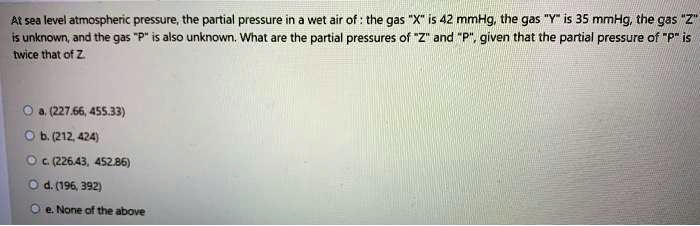
At sea level atmospheric pressure, the partial pressure in a wet air of the gas "X" is 42 mmHg, the gas "Y" is 35 mmHg, the gas "Z" is unknown, and the gas "P" is also unknown. What are the partial pressures of "Z" and "P", given that the partial pressure of "P" is twice that of Z a. (227.66, 455.33) b. (212, 424) c. (226.43, 452.86) d. (196, 392) e. None of the above
View Answer
divider
BEST MATCH

The probability density function for the random phase modulation of a VCO due to additive noise entering a loop is given by the Fokker-Planck method as the Tikhonov density function: u51- 2TIO(PL) What range of values of this random phase will cause the PLL to cycle slip? Simplify the probability density function for large Pi and (hence) small n, and write the integral expression for the probability of cycle slipping. Using the accompanying table, obtain the probability of cycle slipping for a loop having a signal-to-noise ratio in the loop Pi = 10. 8 2 erfc(x) di x erfc(x) 0.0 1.000 0.2 0.777 0.4 0.572 0.6 0.396 0.8 0.258 1.0 0.157 1.2 8.97 x 10⁻² 1.4 4.87 x 10⁻² 1.6 2.37 x 10⁻² 1.8 1.09 x 10⁻² 2.0 7.21 x 10-3 x 2.2 2.4 2.6 2.8 3.0 3.3 3.7 4.0 5.0 erfc(x) 1.86 x 10⁻⁶ 6.9 x 10⁻⁴ 2.4 x 10⁻⁴ 7.9 x 10⁻⁵ 2.3 x 10⁻⁵ 3.2 x 10⁻⁶ 1.7 x 10⁻⁷ 1.5 x 10⁻⁸ 1.5 x 10⁻¹² For large values of x, erfc(x) ~ e-x^2/(x V)

View Answer
divider