Questions asked
$M_{Earth} = 5.97 \times 10^{24}$ kg (Mass of Earth) $M_{Moon} = 7.35 \times 10^{22}$ kg (mass of Moon) $R_{E-M} = 3.85 \times 10^8$ m (average separation of Earth and Moon centers) $R_{Earth} = 6.378 \times 10^6$ m (radius of Earth) $R_{Moon} = 1.738 \times 10^6$ m (radius of Moon) 1a. At Earth's surface, what is its gravitational potential due to its mass only? 1b. At Moon's surface, what is its gravitational potential due to its mass only? 1c. At what point in space along a line between the two objects are the gravitational potentials from each of them equal? 1d. At that point, what is the total gravitational potential? 2. How do you find the gravitational field of two masses for any position around them that is outside the masses? Again, for Earth and Moon consider these specific questions. 2a. At Earth's surface, what is its gravitational field due to its mass only? 2b. At Moon's surface, what is its gravitational field due to its mass only? 2c. At what point in space along a line between the two objects are the gravitational fields from each of them equal in magnitude? 2d. At that point, what is the total gravitational field, adding the two contributions as vectors?
Imagine you have a friend, Bill, with unconscious homosexual impulses. Many people assume Bill is gay, but he is openly homophobic. During college basketball games, he stands in a corner with a bullhorn, denouncing homosexuality. A few years later, Bill surprises everyone by coming out of the closet. He came to terms with his homosexual drives and now publicly admits being gay. Freud might say that Bill was using the defense mechanism of projection denial reaction formation repression
$$V_s(t) = 2 \cos(2t)$$ $$i_{R_1}$$ $$V_{R_1}$$ $$R_1 = 2$$ $$\frac{1}{3} V_R$$ This circuit at sinusoidal steady state. Find the load impedance for this circuit satisfies maximum power transmission.
The basis of property received as an inheritance is generally equal to the fair market value at the decedent's date of death.
is maintain by cycle of events called feedback loop, in which the body sense a change and activates mechanisms to reverse it
1) What do you think about the differences between how men and women handle stress differently as described in the chapter? 2) The chapter describes a number of systems in our body. Which of the systems have you felt stress have had a negative affect? Are there specific symptoms that you recognize? 3) Complete the lab assessment in the chapter: "What are your physiological reactions to stress". What was that activity like for you?
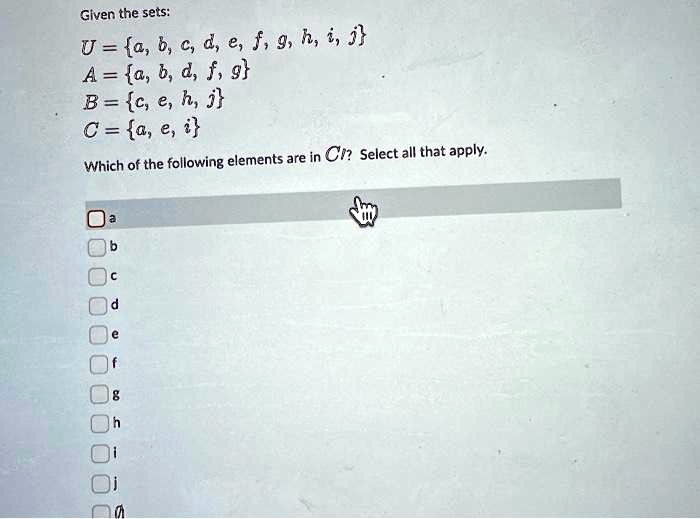
Given the sets: U = {a, b, c, d, e, f, g, h, i, j} A = {a, b, d, f, g} B = {c, e, h, j} C = {a, e, i} Which of the following elements are in C? Select all that apply. a b c d e f g h i j
Martina finished her history assignment in (1)/(3) hours. Then she completed her English assignment in (2)/(5) hours. What was the total amount of time Martina spent doing these two assignments?
Use bisection method to determine the drag coefficient needed so that a 95-kg bungee jumper has a velocity of 46 m/s after 9 s of free fall. Start with initial guesses of $x_l = 0.2$ and $x_u = 0.5$ and iterate until the approximate relative error falls below 5%. \Note: The acceleration of gravity is 9.81 m/s². (Round the final answer to four decimal places.) \The function to evaluate is \$f(c_d) = \sqrt{\frac{gm}{c_d}}\tanh(\sqrt{\frac{gc_d}{m}}t) - v(t)$
c)In the following, resistances in Ohms. R1 = 48; R2 = 72; R3 = 24; Power Pr3 dissipated in R3 is 24 Watts. What are the powers dissipated Pr2 and Pr1 in R2 and R1 Resistances? What is the value of Voltage source V in volts? And Pv, power associated with voltage source V d) Is the above circuit in part (c), stable or unstable, does not matter? Why?