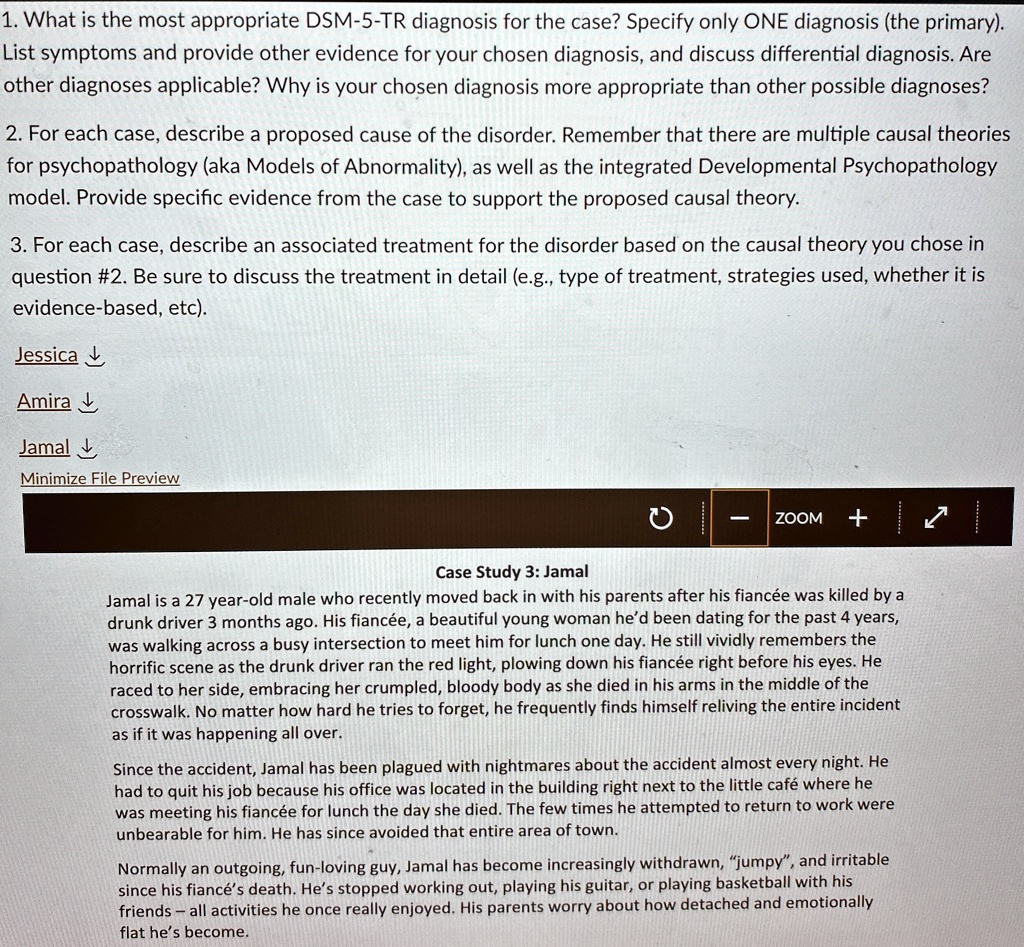
1. What is the most appropriate DSM-5-TR diagnosis for the case? Specify only ONE diagnosis (the primary).
List symptoms and provide other evidence for your chosen diagnosis, and discuss differential diagnosis. Are
other diagnoses applicable? Why is your chosen diagnosis more appropriate than other possible diagnoses?
2. For each case, describe a proposed cause of the disorder. Remember that there are multiple causal theories
for psychopathology (aka Models of Abnormality), as well as the integrated Developmental Psychopathology
model. Provide specific evidence from the case to support the proposed causal theory.
3. For each case, describe an associated treatment for the disorder based on the causal theory you chose in
question #2. Be sure to discuss the treatment in detail (e.g., type of treatment, strategies used, whether it is
evidence-based, etc).
Jessica
Amira
Jamal
Case Study 3: Jamal
Jamal is a 27 year-old male who recently moved back in with his parents after his fiancée was killed by a
drunk driver 3 months ago. His fiancée, a beautiful young woman he'd been dating for the past 4 years,
was walking across a busy intersection to meet him for lunch one day. He still vividly remembers the
horrific scene as the drunk driver ran the red light, plowing down his fiancée right before his eyes. He
raced to her side, embracing her crumpled, bloody body as she died in his arms in the middle of the
crosswalk. No matter how hard he tries to forget, he frequently finds himself reliving the entire incident
as if it was happening all over.
Since the accident, Jamal has been plagued with nightmares about the accident almost every night. He
had to quit his job because his office was located in the building right next to the little café where he
was meeting his fiancée for lunch the day she died. The few times he attempted to return to work were
unbearable for him. He has since avoided that entire area of town.
Normally an outgoing, fun-loving guy, Jamal has become increasingly withdrawn, "jumpy", and irritable
since his fiancé's death. He's stopped working out, playing his guitar, or playing basketball with his
friends - all activities he once really enjoyed. His parents worry about how detached and emotionally
flat he's become.