Cellular Physiology
DNA Replication
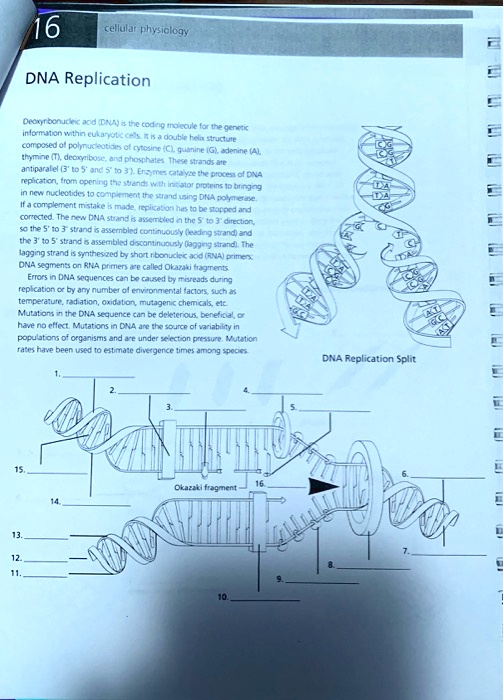
Deoxyribonucleic acid (DNA), the coding molecule for the genetic information within eukaryotic cells, is a double helix structure composed of polynucleotides of cytosine (C), guanine (G), adenine (A), and thymine (T), deoxyribose, and phosphates. The strands are antiparallel, with one strand running from 3' to 5' and the other from 5' to 3'. Enzymes catalyze the process of DNA replication, from opening the strand with initiator protein to bringing in new nucleotides to complement the strand using DNA polymerase. If a complement mistake is made, replication has to be stopped and corrected. The new DNA strand is assembled in the 5' to 3' direction, so the 5' to 3' strand is assembled continuously (leading strand), and the 3' to 5' strand is assembled discontinuously (lagging strand). The lagging strand is synthesized by short ribonucleic acid (RNA) primers. DNA segments on RNA primers are called Okazaki fragments. Errors in DNA sequences can be caused by misreads during replication or by any number of environmental factors, such as temperature, radiation, oxidation, mutagenic chemicals, etc. Mutations in the DNA sequence can be deleterious, beneficial, or have no effect. Mutations in DNA are the source of variability in populations of organisms and are under selection pressure. Mutation rates have been used to estimate divergence times among species.