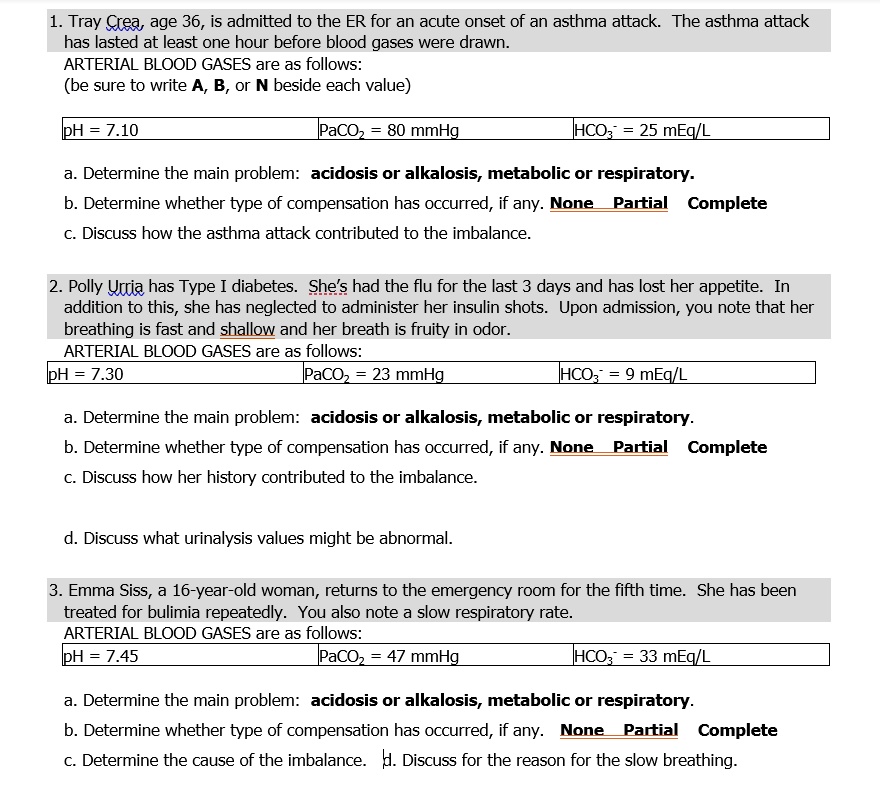
1. Tray Crea, age 36, is admitted to the ER for an acute onset of an asthma attack. The asthma attack
has lasted at least one hour before blood gases were drawn.
ARTERIAL BLOOD GASES are as follows:
(be sure to write A, B, or N beside each value)
pH = 7.10
PaCO2 = 80 mmHg
HCO3 = 25 mEq/L
a. Determine the main problem: acidosis or alkalosis, metabolic or respiratory.
b. Determine whether type of compensation has occurred, if any. None Partial Complete
c. Discuss how the asthma attack contributed to the imbalance.
2. Polly Urria has Type I diabetes. She's had the flu for the last 3 days and has lost her appetite. In
addition to this, she has neglected to administer her insulin shots. Upon admission, you note that her
breathing is fast and shallow and her breath is fruity in odor.
ARTERIAL BLOOD GASES are as follows:
pH = 7.30
PaCO2 = 23 mmHg
HCO3 = 9 mEq/L
a. Determine the main problem: acidosis or alkalosis, metabolic or respiratory.
b. Determine whether type of compensation has occurred, if any. None Partial Complete
c. Discuss how her history contributed to the imbalance.
d. Discuss what urinalysis values might be abnormal.
3. Emma Siss, a 16-year-old woman, returns to the emergency room for the fifth time. She has been
treated for bulimia repeatedly. You also note a slow respiratory rate.
ARTERIAL BLOOD GASES are as follows:
pH = 7.45
PaCO2 = 47 mmHg
HCO3 = 33 mEq/L
a. Determine the main problem: acidosis or alkalosis, metabolic or respiratory.
b. Determine whether type of compensation has occurred, if any. None Partial Complete
c. Determine the cause of the imbalance. d. Discuss for the reason for the slow breathing.