CASE STUDY #2 (B.C.)
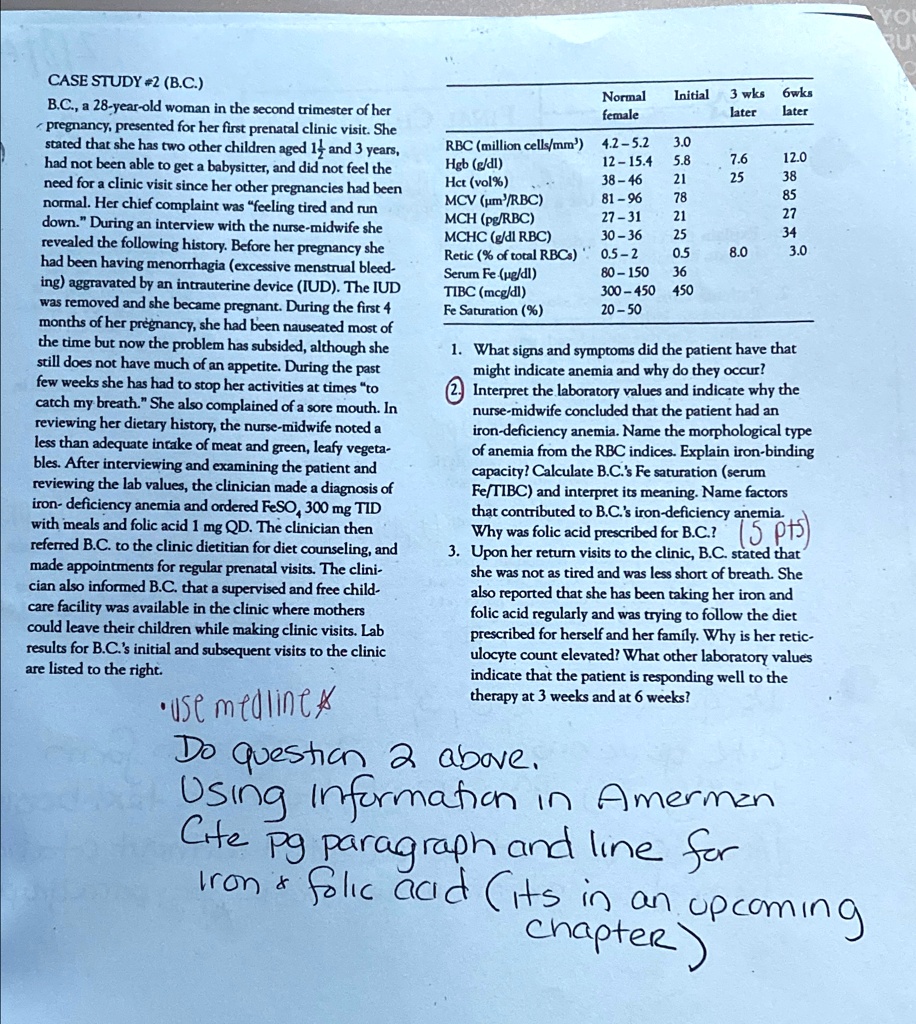
B.C., a 28-year-old woman in the second trimester of her pregnancy, presented for her first prenatal clinic visit. She stated that she has two other children aged 1 and 3 years, had not been able to get a babysitter, and did not feel the need for a clinic visit since her other pregnancies had been normal. Her chief complaint was "feeling tired and run down." During an interview with the nurse-midwife she revealed the following history. Before her pregnancy she had been having menorrhagia (excessive menstrual bleeding) aggravated by an intrauterine device (IUD). The IUD was removed and she became pregnant. During the first 4 months of her pregnancy, she had been nauseated most of the time but now the problem has subsided, although she still does not have much of an appetite. During the past few weeks she has had to stop her activities at times "to catch my breath." She also complained of a sore mouth. In reviewing her dietary history, the nurse-midwife noted a less than adequate intake of meat and green, leafy vegetables. After interviewing and examining the patient and reviewing the lab values, the clinician made a diagnosis of iron-deficiency anemia and ordered FeSO4 300mg TID with meals and folic acid 1mg QD. The clinician then referred B.C. to the clinic dietitian for diet counseling, and made appointments for regular prenatal visits. The clinician also informed B.C. that a supervised and free childcare facility was available in the clinic where mothers could leave their children while making clinic visits. Lab results for B.C.'s initial and subsequent visits to the clinic are listed to the right.
What signs and symptoms did the patient have that might indicate anemia and why do they occur?
Interpret the laboratory values and indicate why the nurse-midwife concluded that the patient had an iron-deficiency anemia. Name the morphological type of anemia from the RBC indices. Explain iron-binding capacity? Calculate B.C.'s Fe saturation (serum Fe/TIBC) and interpret its meaning. Name factors that contributed to B.C.'s iron-deficiency anemia. Why was folic acid prescribed for B.C.?
Upon her return visits to the clinic, B.C. stated that she was not as tired and was less short of breath. She also reported that she has been taking her iron and folic acid regularly and was trying to follow the diet prescribed for herself and her family. Why is her reticulocyte count elevated? What other laboratory values indicate that the patient is responding well to the therapy at 3 weeks and at 6 weeks?
Do question 2 above.
Using information in Amermin
Cite pg paragraph and line for
Iron' folic acid (its in an up chapter)