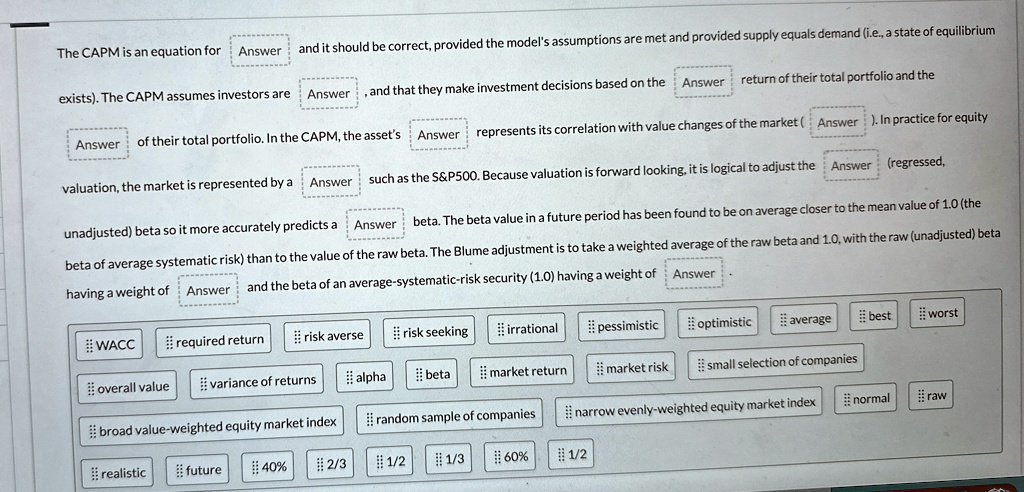
The CAPM is an equation for Answer and it should be correct, provided the model's assumptions are met and provided supply equals demand (i.e., a state of equilibrium exists). The CAPM assumes investors are Answer , and that they make investment decisions based on the Answer return of their total portfolio and the Answer of their total portfolio. In the CAPM, the asset's Answer represents its correlation with value changes of the market (Answer). In practice for equity valuation, the market is represented by a Answer such as the S&P500. Because valuation is forward looking, it is logical to adjust the Answer (regressed, unadjusted) beta so it more accurately predicts a Answer beta. The beta value in a future period has been found to be on average closer to the mean value of 1.0 (the beta of average systematic risk) than to the value of the raw beta. The Blume adjustment is to take a weighted average of the raw beta and 1.0, with the raw (unadjusted) beta having a weight of Answer and the beta of an average-systematic-risk security (1.0) having a weight of Answer