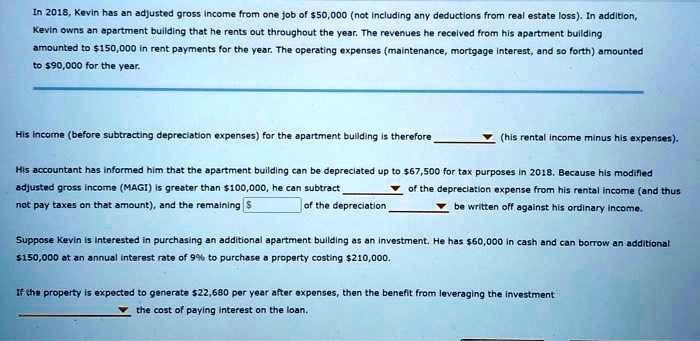
In 2018, Kevin has an adjusted gross income from one job of $50,000 (not including any deductions from real estate loss). In addition,
Kevin owns an apartment building that he rents out throughout the year. The revenues he received from his apartment building
amounted to $150,000 in rent payments for the year. The operating expenses (maintenance, mortgage interest, and so forth) amounted
to $90,000 for the year.
His income (before subtracting depreciation expenses) for the apartment building is therefore
(his rental income minus his expenses).
His accountant has informed him that the apartment building can be depreciated up to $67,500 for tax purposes in 2018. Because his modified
adjusted gross income (MAGI) is greater than $100,000, he can subtract
of the depreciation expense from his rental income (and thus
not pay taxes on that amount), and the remaining $
$ of the depreciation
be written off against his ordinary income.
Suppose Kevin is interested in purchasing an additional apartment building as an investment. He has $60,000 in cash and can borrow an additional
$150,000 at an annual interest rate of 9% to purchase a property costing $210,000.
If the property is expected to generate $22,680 per year after expenses, then the benefit from leveraging the investment
the cost of paying interest on the loan.