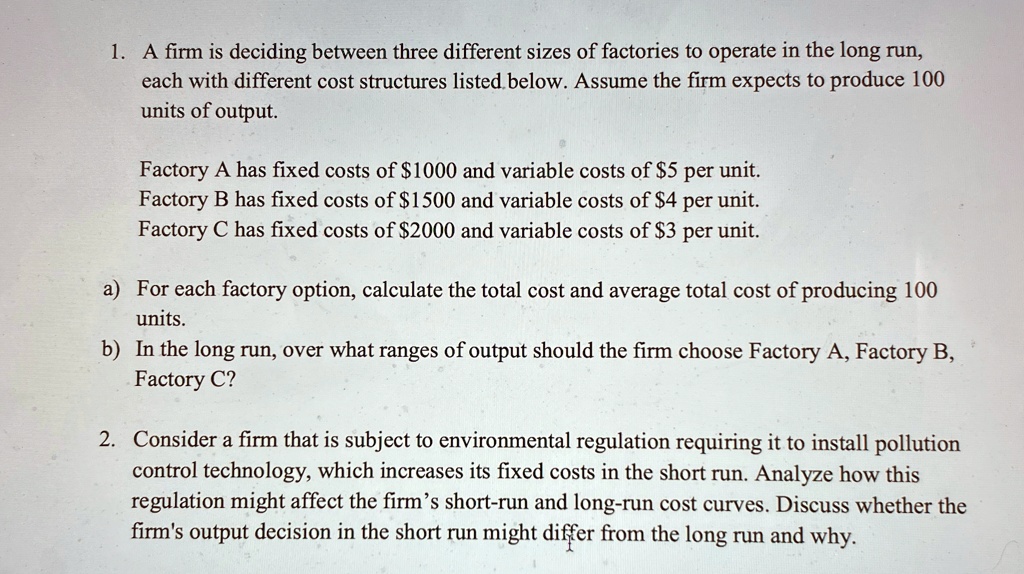
A firm is deciding between three different sizes of factories to operate in the long run, each with different cost structures listed below. Assume the firm expects to produce 100 units of output.
Factory A has fixed costs of $1000 and variable costs of $5 per unit.
Factory B has fixed costs of $1500 and variable costs of $4 per unit.
Factory C has fixed costs of $2000 and variable costs of $3 per unit.
a) For each factory option, calculate the total cost and average total cost of producing 100 units.
b) In the long run, over what ranges of output should the firm choose Factory A, Factory B, Factory C?
Consider a firm that is subject to environmental regulation requiring it to install pollution control technology, which increases its fixed costs in the short run. Analyze how this regulation might affect the firm's short-run and long-run cost curves. Discuss whether the firm's output decision in the short run might differ from the long run and why.
l. A firm is deciding between three different sizes of factories to operate in the long run each with different cost structures listed.below. Assume the firm expects to produce 100 units of output
Factory A has fixed costs of $1000 and variable costs of $5 per unit Factory B has fixed costs of $1500 and variable costs of $4 per unit. Factory C has fixed costs of $2000 and variable costs of $3 per unit
a)For each factory option, calculate the total cost and average total cost of producing 100 units. b) In the long run,over what ranges of output should the firm choose Factory A, Factory B, Factory C?
2. Consider a firm that is subject to environmental regulation requiring it to install pollution control technology, which increases its fixed costs in the short run. Analyze how this regulation might affect the firm's short-run and long-run cost curves. Discuss whether the firm's output decision in the short run might differ from the long run and why