Questions asked
I. Supersaturated solutions are very stable II. The solubility of gases in liquids increases as the temperature is raised III. The solubility of gases in liquids is independent of the external pressure O II only O I and III only O none are true O II and III only O I and II only
The alternate hypothesis tells the researcher to reject the null hypothesis; which concludes that there is a statistically difference between your variable being measured. True False Clear selection
Consider a position in a long straddle at strike 90 and a short straddle at strike 100, both for the same maturity. Which of the following properties is valid for this position? A. The payoff is unbounded. B. The payoff is always negative. C. The payoff is increasing in the stock price. D. The payoff is always positive.
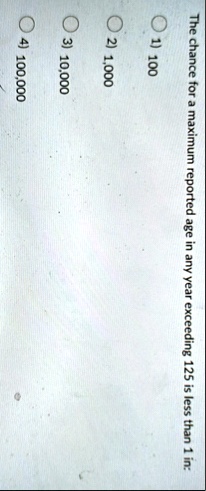
The chance for a maximum reported age in any year exceeding 125 is less than 1 in: 1) 100 2) 1,000 3) 10,000 4) 100,000
4. Each of the four cylinders of a car operating with an ideal Otto cycle has a volume of 450 cm³. Air enters at a pressure of 1 bar and a temperature of 290 K. The compression ratio is 9 and the maximum temperature of the cycle is 1800 K. Determine: a) The specific internal energy in all the states of the cycle; b) the net work of the cycle (for all four cylinders); c) the heat addition (for all four cylinders); d) the power delivered by the engine at 2600 rpm.
Find the perimeter of the following figure.
2. The following are examples of addition reactions we have learned and used this semester: A. $H_3C-C(CH_3)=CH-CH_2 + H_2SO_4 + H_2O \rightarrow H_3C-C(CH_3)(OH)-CH_2-CH_3$ B. $CH_3-C(CH_3)=C-CH_3 + 1) CH_3MgBr \rightarrow CH_3-C(CH_3)(OH)-CH_2-CH_3$ $2) acid$ C. $H_3C-C(CH_3)=CH-CH_2 + H_2(g) \xrightarrow{Pt} H_3C-C(CH_3)(OH)-CH_2-CH_3$ D. $H_3C-C(CH_3)=CH-CH_2 + 1) BH_3 \rightarrow H_3C-C(CH_3)(OH)-CH_2-CH_3$ $2) H_2O_2$ E. $H_3C-C(CH_3)=C=CH + H_2SO_4 \xrightarrow{HgO} H_3C-C(CH_3)(OH)-CH_2-CH_3$ F. $2CH_3-C(CH_3)=CH_2 + NaOH + H_2O \rightarrow (CH_3)_3CCH_2CH(CH_3)CH_2C(CH_3)_3$ G. $ + (CH_3)_3COOH \xrightarrow{(CH_3)_3COH, OSO_4} $ H. $ + \rightarrow $ I. $H_3C-C(CH_3)=CH-CH_2 + peroxy \rightarrow H_3C-C(CH_3)(O)-CH_2-CH_3$ $acid$ J. $H_2C=C(CH_3)-C-CH_3 + H_2S \rightarrow H_2C-CH(SH)-C-CH_3$ K. a) Which of these are classified as alkene addition reactions? b) Which of these are classified as alkyne addition reactions? c) Which of these are classified as cycloaddition reactions? d) Which of these are classified as carbonyl addition reactions? e) Which of these are also classified as Diels-Alder reactions? f) Which of these are also classified as aldol addition reactions? g) Which of these are also classified as carbon bond forming reactions? h) Which of these are also classified as Michael addition reactions? i) Which of these are also classified as syn-hydroxylation reactions? (List all that apply)
The cats in Thorndike's puzzle boxes were able to escape more quickly over successive trials. Thorndike interpreted this performance change to reflect Question 7 options: stimulus-outcome learning. stimulus-stimulus learning. stimulus-response learning. response-outcome learning.
Use formulas d=vt and \theta =wt to show how we get the relationship v=rw
Item 19 Which one of the following bone cells would have the greatest number of lysosomes?