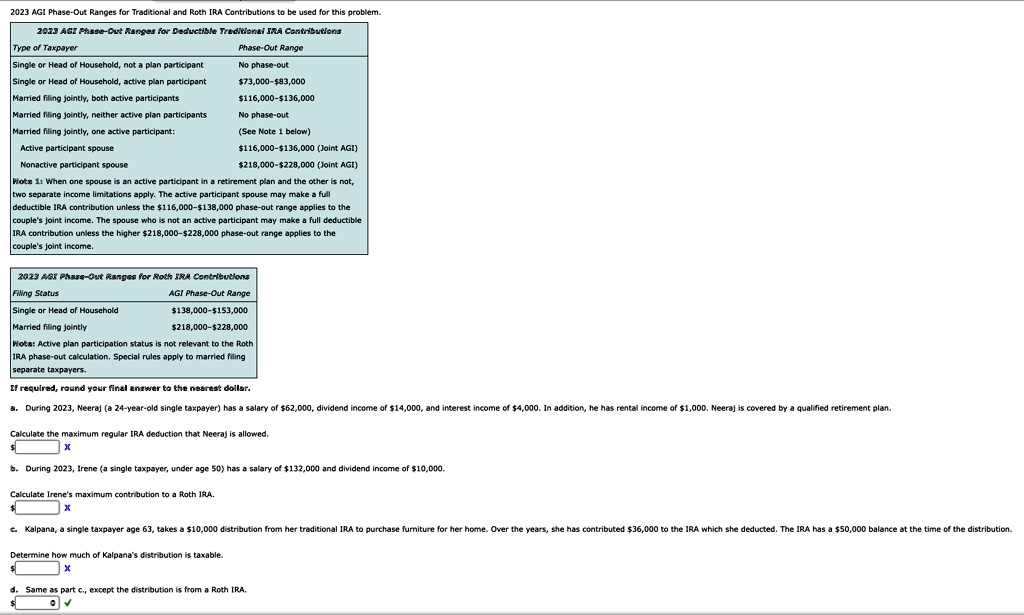
a. During 2023, Neeraj (a 24-year-old single taxpayer) has a salary of $62,000, dividend income of $14,000, and interest income of $4,000. In addition, he has rental income of $1,000. Neeraj is covered by a qualified retirement plan.
Calculate the maximum regular IRA deduction that Neeraj is allowed.
Fill in the blank: $6,000
b. During 2023, Irene (a single taxpayer, under age 50) has a salary of $132,000 and dividend income of $10,000.
Calculate Irene's maximum contribution to a Roth IRA.
Fill in the blank: $6,000
c. Kalpana, a single taxpayer age 63, takes a $10,000 distribution from her traditional IRA to purchase furniture for her home. Over the years, she has contributed $36,000 to the IRA which she deducted. The IRA has a $50,000 balance at the time of the distribution.
Determine how much of Kalpana's distribution is taxable.
x
Same as part c., except the distribution is from a Roth IRA.
x