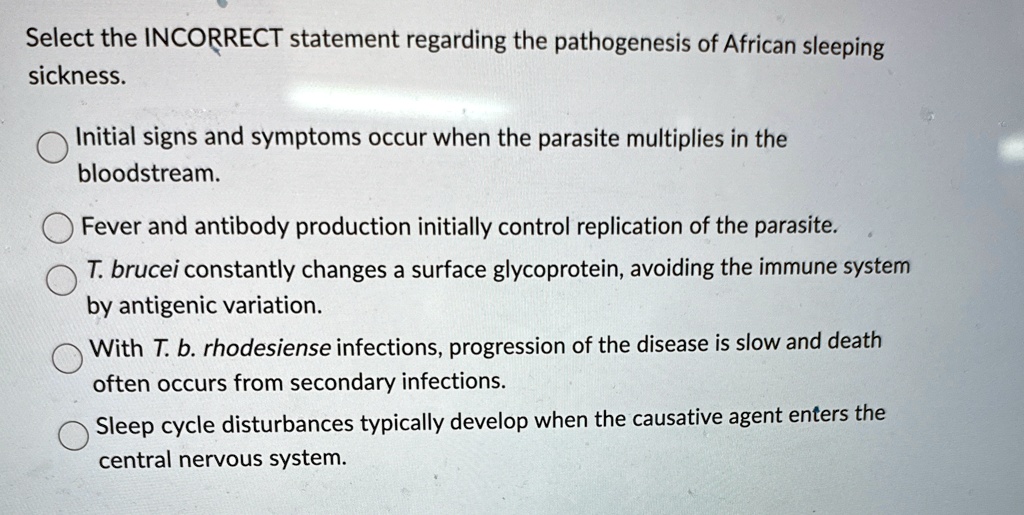
Select the INCORRECT statement regarding the pathogenesis of African sleeping
sickness.
Initial signs and symptoms occur when the parasite multiplies in the
bloodstream.
Fever and antibody production initially control replication of the parasite.
T. brucei constantly changes a surface glycoprotein, avoiding the immune system
by antigenic variation.
With T. b. rhodesiense infections, progression of the disease is slow and death
often occurs from secondary infections.
Sleep cycle disturbances typically develop when the causative agent enters the
central nervous system.