A researcher wants to determine the effect that smoking has on resting heart rate. She
randomly selects seven individuals from three categories: (1) nonsmokers, (2) light smokers
(fewer than 10 cigarettes per day), and (3) heavy smokers (10 or more cigarettes per day)
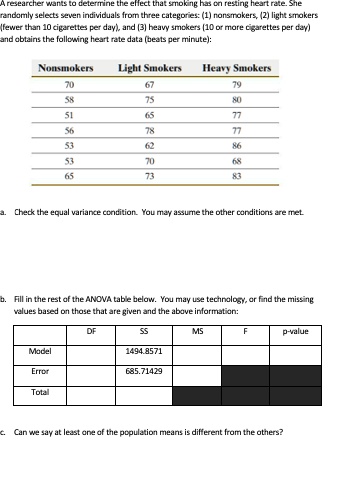
and obtains the following heart rate data (beats per minute):
a. Check the equal variance condition. You may assume the other conditions are met.
b. Fill in the rest of the ANOVA table below. You may use technology, or find the missing
values based on those that are given and the above information:
Can we say at least one of the population means is different from the others?
Randomly selects seven individuals from three categories: (1) nonsmokers, (2) light smokers (fewer than 10 cigarettes per day), and (3) heavy smokers (10 or more cigarettes per day) and obtains the following heart rate data (beats per minute):
Nonsmokers 70 58 51 56 53 53 65
Light Smokers 67 75 65 78 62 70 73
Heavy Smokers 79 80 77 77 86 68 83
Check the equal variance condition. You may assume the other conditions are met.
Fill in the rest of the ANOVA table below. You may use technology, or find the missing values based on those that are given and the above information:
DF
SS
MS
p-value
1494.8571
685.71429
Total
Can we say at least one of the population means is different from the others?