E4-9. Determining cash from operations and reconciling with accrual
net
income
Requirement 1:
Net income
$100,000
Non-cash expenses:
Depreciation
30,000
130,000
Changes in working capital accounts:
Increase in accounts receivable
(110,000)
Decrease in inventories
50,000
Increase in prepaid expenses
(15,000)
Decrease in accounts payable
(150,000)
Increase in salaries payable
15,000
Decrease in other current liabilities
(70,000)
(280,000)
Cash provided (used) by operating activities
($150,000)
Requirement 2:
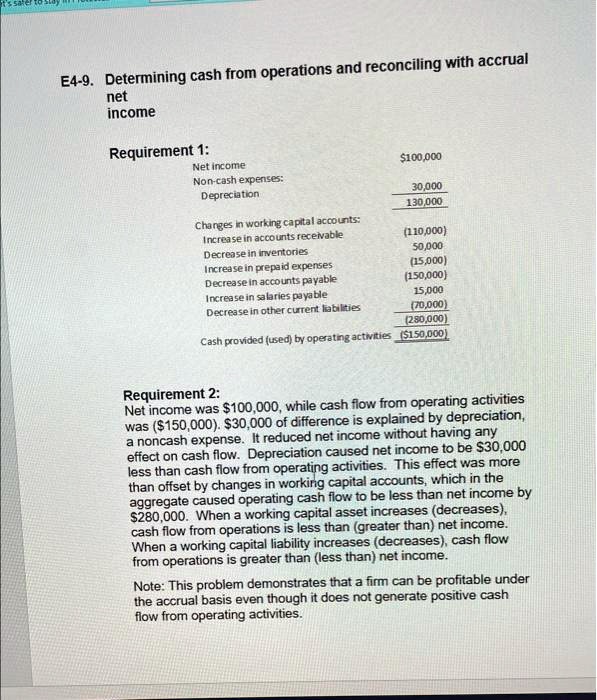
Net income was $100,000, while cash flow from operating activities
was ($150,000). $30,000 of difference is explained by depreciation,
a noncash expense. It reduced net income without having any
effect on cash flow. Depreciation caused net income to be $30,000
less than cash flow from operating activities. This effect was more
than offset by changes in working capital accounts, which in the
aggregate caused operating cash flow to be less than net income by
$280,000. When a working capital asset increases (decreases),
cash flow from operations is less than (greater than) net income.
When a working capital liability increases (decreases), cash flow
from operations is greater than (less than) net income.
Note: This problem demonstrates that a firm can be profitable under
the accrual basis even though it does not generate positive cash
flow from operating activities.