Consumer and Producer Surplus - End of Chapter Problem
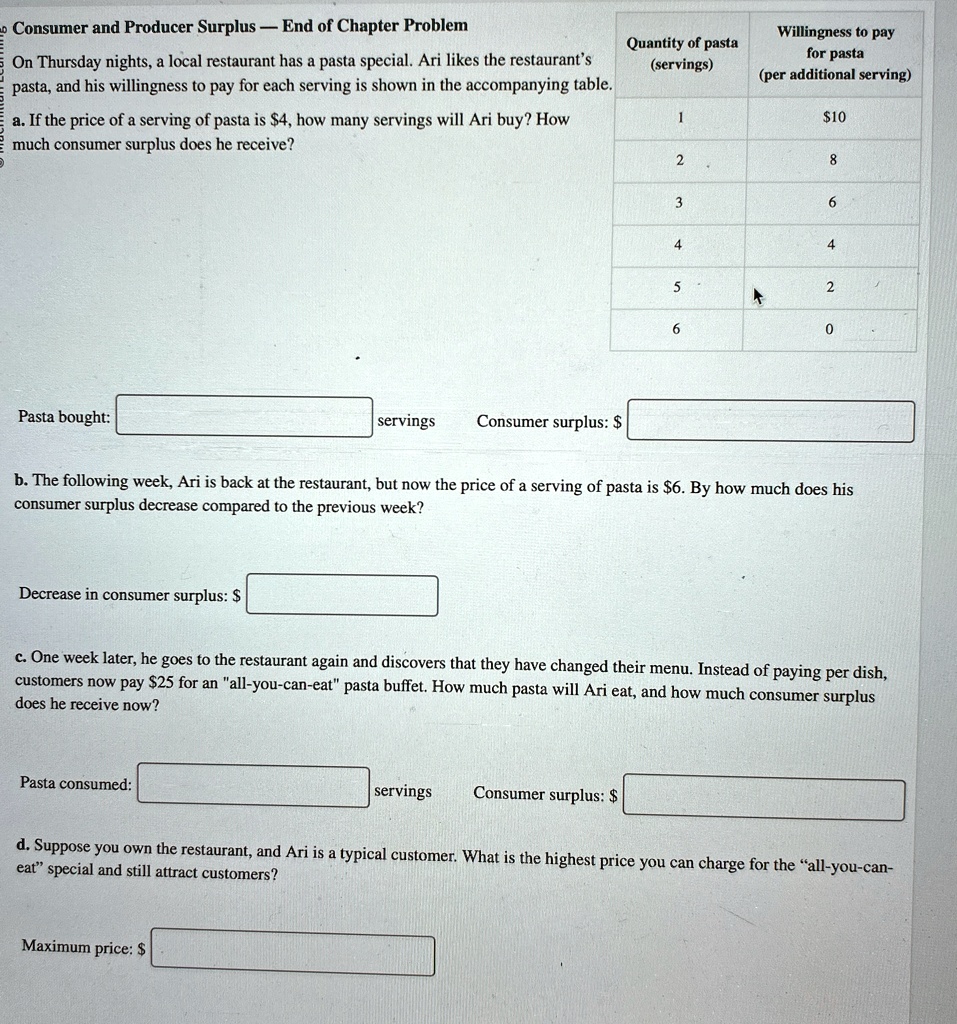
On Thursday nights, a local restaurant has a pasta special. Ari likes the restaurant's
pasta, and his willingness to pay for each serving is shown in the accompanying table.
a. If the price of a serving of pasta is $4, how many servings will Ari buy? How
much consumer surplus does he receive?
Quantity of pasta
(servings)
Willingness to pay
for pasta
(per additional serving)
1 $10
2 8
3 6
4 4
5 2
6 0
Pasta bought: servings Consumer surplus: $
b. The following week, Ari is back at the restaurant, but now the price of a serving of pasta is $6. By how much does his
consumer surplus decrease compared to the previous week?
Decrease in consumer surplus: $
c. One week later, he goes to the restaurant again and discovers that they have changed their menu. Instead of paying per dish,
customers now pay $25 for an "all-you-can-eat" pasta buffet. How much pasta will Ari eat, and how much consumer surplus
does he receive now?
Pasta consumed: servings Consumer surplus: $
d. Suppose you own the restaurant, and Ari is a typical customer. What is the highest price you can charge for the "all-you-can-
eat" special and still attract customers?
Maximum price: $