Questions asked
A toboggan slides down a hill and has a constant velocity. The angle of the hill is 8.80° with respect to the horizontal. What is the coefficient of kinetic friction between the surface of the hill and the toboggan?
8. Which of the following indices are market-value weighted? I. The NYSE Composite II. The S&P 500 III. The Wilshire 5000 A. I and II only B. II and III only C. I and III only D. I, II and III
Which term describes an eating disorder in which the individual consumes a large amount of calories at one sitting and then engages in a compensatory behavior in an attempt to remove these calories from the body? O Obesity O Anorexia nervosa O Bulimia nervosa O Eating disorder not otherwise specified
The aerobic glycolysis system is closely linked with several fitness components such as local muscular endurance True False
Let $f(x) = 1/x^2$ Select all that apply. f is undefined at $x = 0$. The limit of f as x approaches 0 is infinity. f has a vertical asymptote at $y = 0$ f has a vertical asymptote at $x = 0$. The limit of f as x approaches 0 is negative infinity.
MC Qu. 07-78 In tit-for-tat, if your partner... In tit-for-tat, if your partner. in your first interaction, then you will in your next interaction.
2.7 In the circuit shown in Figure 2.7, determine $v_x$ and the power absorbed by the 12\Omega resistor.
(a) $X(\omega) = 10\pi\delta \left(\omega - \frac{\pi}{4}\right) + 10\pi\delta \left(\omega + \frac{\pi}{4}\right)$. \\ $R/10 \cos\left(\frac{\pi}{4}k\right)$. \\ (b) $X(\omega) = \begin{cases} j & 0 < \omega < \pi \\ -j & -\pi < \omega < 0 \end{cases}$ \\ $R/ \frac{-1}{\pi} + \frac{\cos n\pi}{n\pi}$. \\ (c) $X(\omega) = 7e^{-j2\omega} + 4e^{-j\omega} + 6$ \\ $R/ \{6, 4, 7\}$.
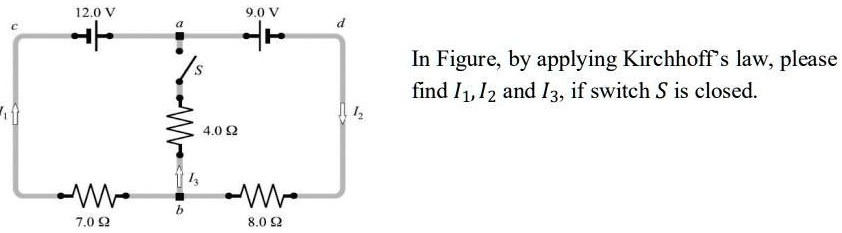
12.0 V 9.0 V c a d S In Figure, by applying Kirchhoff's law, please find $I_1$, $I_2$ and $I_3$, if switch S is closed. $I_1$ 4.0 ? $I_3$ b 7.0 ? 8.0 ? $I_2$
4. 5.66/10 points Previous Answers My Notes Ask Your Teacher A mirror at an amusement park shows an upright image of any person who stands 1.0-m in front of it. If the image is 3.2 times the person's height, what is the radius of curvature? 2.91 What type of mirror is it? Choose one answer only. • concave convex How close would the person have to stand to the same mirror to see an upright image 2.0 times their height? m from the mirror