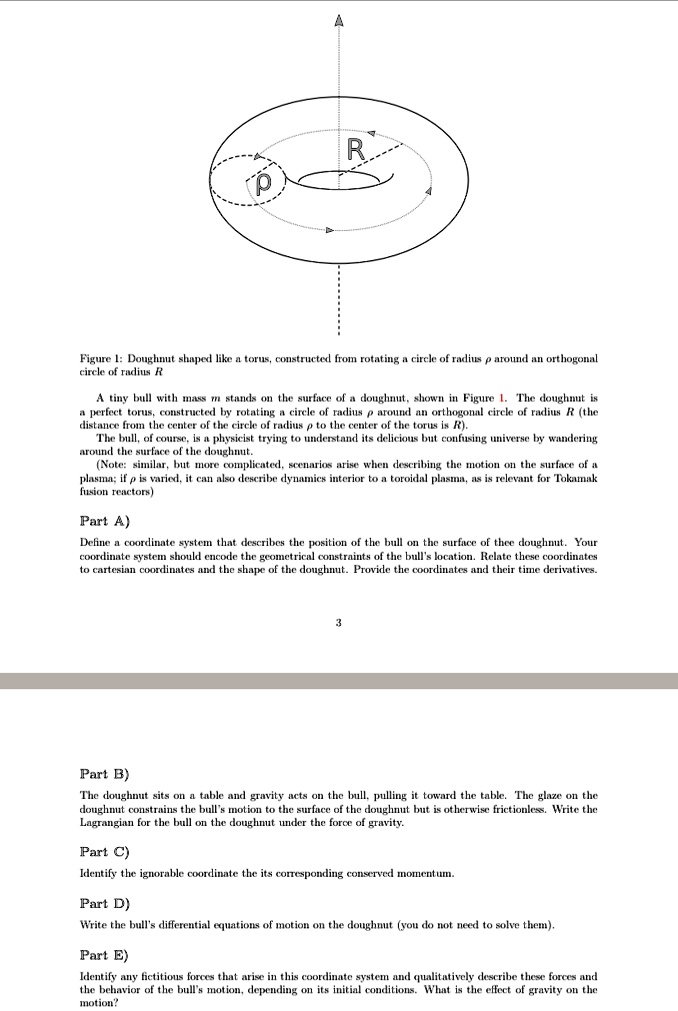
Figure 1: Doughnut shaped like a torus, constructed from rotating a circle of radius
ho around an orthogonal circle of radius R
A tiny bull with mass m stands on the surface of a doughnut, shown in Figure 1. The doughnut is a perfect torus, constructed by rotating a circle of radius
ho around an orthogonal circle of radius R (the distance from the center of the circle of radius
ho to the center of the torus is R ).
The bull, of course, is a physicist trying to understand its delicious but confusing universe by wandering around the surface of the doughnut.
(Note: similar, but more complicated, scenarios arise when describing the motion on the surface of a plasma; if
ho is varied, it can also describe dynamics interior to a toroidal plasma, as is relevant for Tokamak fusion reactors)
Part A)
Define a coordinate system that describes the position of the bull on the surface of thee doughnut. Your coordinate system should encode the geometrical constraints of the bull's location. Relate these coordinates to cartesian coordinates and the shape of the doughnut. Provide the coordinates and their time derivatives.
3
Part B)
The doughnut sits on a table and gravity acts on the bull, pulling it toward the table. The glaze on the doughnut constrains the bull's motion to the surface of the doughnut but is otherwise frictionless. Write the Lagrangian for the bull on the doughnut under the force of gravity.
Part C)
Identify the ignorable coordinate the its corresponding conserved momentum.
Part D)
Write the bull's differential equations of motion on the doughnut (you do not need to solve them).
Part E)
Identify any fictitious forces that arise in this coordinate system and qualitatively describe these forces and the behavior of the bull's motion, depending on its initial conditions. What is the effect of gravity on the motion?
Figure 1: Doughnut shaped like a torus, constructed from rotating a circle of radius around an orthogonal circle of radius R
A tiny bull with mass m stands on the surface of a doughnut, shown in Figure 1. The doughnut is a perfect torus, constructed by rotating a cirele of radius around an orthogonal circle of radius R (the distance from the center of the circle of radius to the center of the torus is R) The bull, of course, is a physicist trying to understand its delicious but confusing universe by wandering around the surface of the doughnut. (Note: similar, but more complicated, scenarios arise when describing the motion on the surface of a plasma; if is varied, it can also describe dynamics interior to a toroidal plasma, as is relevant for Tokamak fusion reactors)
Part A) Define a coordinate system that describes the position of the bull on the surface of thee doughnut. Your coordinate system should encode the geometrical constraints of the bull's location. Relate these coordinates to cartesian coordinates and the shape of the doughnut. Provide the coordinates and their time derivatives.
Part B) The doughnut sits on a table and gravity acts on the bull, pulling it toward the table. The glaze on the doughnut constrains the bull's motion to the surface of the doughnut but is otherwise frictionless. Write the Lagrangian for the bull on the doughnut under the force of gravity.
Part C) Identify the ignorable coordinate the its corresponding conserved momentum.
Part D) Write the bulls differential equations of motion on the doughnut (you do not need to solve them).
Part E) Identify any fictitious forces that arise in this coordinate system and qualitatively describe these forces and the behavior of the bull's motion, depending on its initial conditions. What is the effect of gravity on the motion?