STEPS IN THE ACCOUNTING CYCLE
The usual sequence of steps in the recording process is to
a. analyze each transaction, enter the transaction in the journal, and transfer the information
to the ledger accounts.
b. analyze each transaction, enter the transaction in the ledger, and transfer the information
to the journal.
c. analyze each transaction, enter the transaction in the book of accounts, and transfer the
information to the journal.
d. analyze each transaction, enter the transaction in the book of original entry, and transfer
the information to the journal.
A complete journal entry does not show
a. the date of the transaction.
b. the new balance in the accounts affected by the transaction.
c. a brief explanation of the transaction.
d. the accounts and amounts to be debited and credited.
BEHAVIOR OF ACCOUNTS
A debit is not the normal balance for which account listed below?
a. Dividends
b. Cash
c. Accounts Receivable
d. Service Revenue
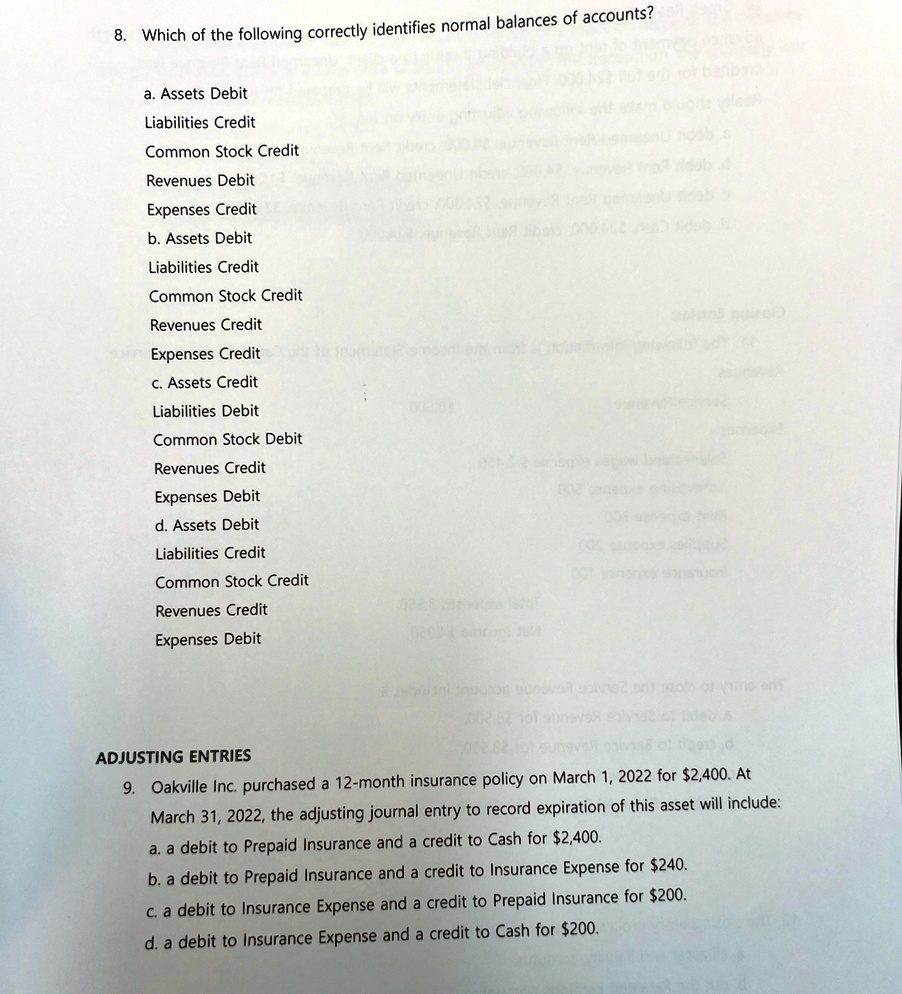
a. Assets Debit Liabilities Credit
Common Stock Credit Revenues Debit Expenses Credit b.Assets Debit
Liabilities Credit
Common Stock Credit
Revenues Credit
Expenses Credit c.Assets Credit
Liabilities Debit
Common Stock Debit
Revenues Credit Expenses Debit d.Assets Debit Liabilities Credit Common Stock Credit Revenues Credit Expenses Debit
ADJUSTING ENTRIES 9.Oakville Inc. purchased a 12-month insurance policy on March 1, 2022 for $2,400. At March 31, 2022, the adjusting journal entry to record expiration of this asset will include: a.a debit to Prepaid Insurance and a credit to Cash for $2,400 b.a debit to Prepaid Insurance and a credit to Insurance Expense for $240 c.a debit to Insurance Expense and a credit to Prepaid Insurance for $200 d.a debit to Insurance Expense and a credit to Cash for $200