B
7
C
B (2, A)
C (?, -)
2
3
2
3
E
2
F
(?,-)
A
D
A
F(?,-) D (?, -)
2
6
2
4
G
H
G (6, A)
H (?,-)
(a)
(b)
B (2, A)
C (9, B)
B (2, A)
C (9, B)
E (4, B)
E (4, B)
A
F(?,-) D (?,-)
A
F (6, E) D (?,1)
G (6, A)
H (?,-)
G (5, E)
H (?,-)
(c)
(d)
B (2, A)
C (9, B)
B (2, A)
C (9, B)
E (4, B)
E (4, B)
A
F (6, E)
D (?,-)
A
F (6,E) D (?,1)
G (5, E)
H (9, G)
G (5, E)
H (8, F)
(e)
(f)
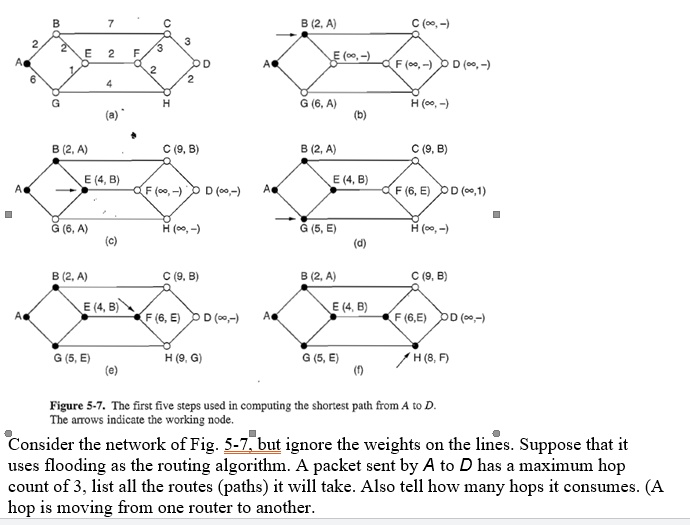
Figure 5-7. The first five steps used in computing the shortest path from A to D.
The arrows indicate the working node.
Consider the network of Fig. 5-7, but ignore the weights on the lines. Suppose that it
uses flooding as the routing algorithm. A packet sent by A to D has a maximum hop
count of 3, list all the routes (paths) it will take. Also tell how many hops it consumes. (A
hop is moving from one router to another.