Questions asked
Potential donors will differ in the amount and duration of their donation. What donor group is likely to support the institution for the most years? Explain.
Please correctly answer the question
Develop the analysis of variance computations for the following completely randomized design. At 𝛼 = 0.05, is there a significant difference between the treatment means? TreatmentABC13610792120114821131258510710410113110789114109117129971101021141201049889106 xj 119107100 sj2 146.8696.44173.78 State the null and alternative hypotheses. H0: Not all the population means are equal. Ha: 𝜇A = 𝜇B = 𝜇CH0: At least two of the population means are equal. Ha: At least two of the population means are different. H0: 𝜇A ≠ 𝜇B ≠ 𝜇C Ha: 𝜇A = 𝜇B = 𝜇CH0: 𝜇A = 𝜇B = 𝜇C Ha: 𝜇A ≠ 𝜇B ≠ 𝜇CH0: 𝜇A = 𝜇B = 𝜇C Ha: Not all the population means are equal. Find the value of the test statistic. (Round your answer to two decimal places.) Find the p-value. (Round your answer to four decimal places.) p-value = State your conclusion. Do not reject H0. There is not sufficient evidence to conclude that the means of the three treatments are not equal.Reject H0. There is sufficient evidence to conclude that the means of the three treatments are not equal. Do not reject H0. There is sufficient evidence to conclude that the means of the three treatments are not equal.Reject H0. There is not sufficient evidence to conclude that the means of the three treatments are not equal.
quizzing/user/attempt/quiz_start_frame_auto.d21?ou=15581\&isprv=8 10 Question 1 (5 points) Listen Determine the value of \( x \). \( x=2 \) \( x=2.5 \) \( x=2.9 \) \( x=1 \) Question 2 (5 points)
A +1.0 nC and -1.5 nC point charge are placed 6 cm apart at points P and Q. A point R is equidistant to both charges. If an additional charge of +4.0 nC is supplied to both charges, what is the magnitude of the electric field at R and the direction of this field? Magnitude of electric field strength | Direction of electric field A. $0.3k \times 10^{-5} NC^{-1}$ | Towards X B. $0.3k \times 10^{-5} NC^{-1}$ | Towards Y C. $0.1k \times 10^{-11} NC^{-1}$ | Towards X D. $0.2k \times 10^{-13} NC^{-1}$ | Towards Y
Why do we call the mechanical changes of the basilar membrane the cochlear amplifier?
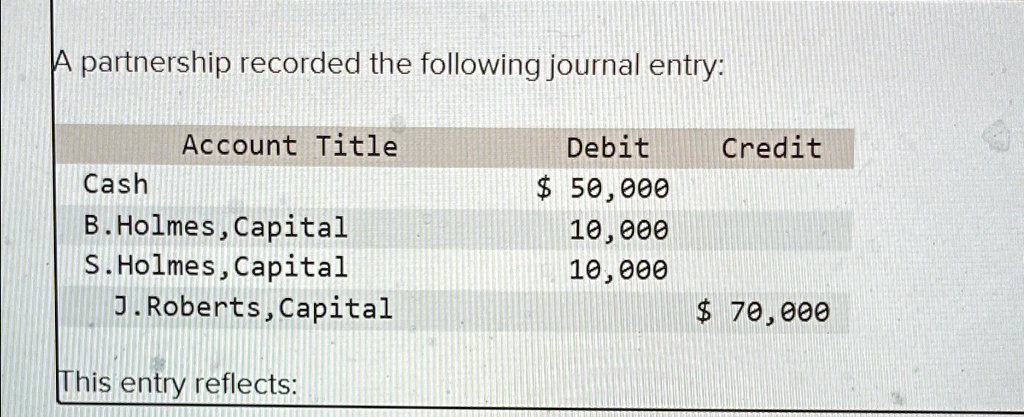
A partnership recorded the following journal entry: Account Title Debit Credit Cash $ 50,000 B. Holmes, Capital 10,000 S.Holmes, Capital 10,000 J. Roberts, Capital $ 70,000 This entry reflects:
17. Suppose \{f_n\} is a sequence of Riemann integrable functions on [a, b] and $f_n \xrightarrow{u} f$ on [a, b]. What (if anything) can be said about the limit \(\lim_{n} \int_{a}^{b} f_n\)?
I.Skn Find V-TO 680 Ω + 9V 3V 33K
Question 2 (1 point) Suppose that $X_1$, $X_2$, $X_3$ are perfectly multicollinear. Then, I can predict $X_3$ very precisely given $X_1$, $X_2$ although I cannot know the exact value of $X_3$. False Question 3 (1 point) What is the example of perfect multicollinearity a) Fraction of English learners and Percentage of English learners b) Percentage of English speakers and Percentage of English learners c) Dummy variables of Male and Female d) All of the above Question 4 (1 point) What is the correct explanation of a control variable a) It is used to correct the bias from the imperfect multicollinearity b) The coefficient of a control variable is mostly consistent under the key least squares assumptions c) It satisfies the conditional mean independence d) It is a main object of interest in our study