If electron (or hole) density is measured as a function of temperature in a doped semiconductor, one observes three regimes: Freeze-out, saturation and intrinsic
(1)
a. Define and explain the three different regimes, illustrate with a plot of carrier density versus temperature.
b. Which regime is best for the device to 'operate'
(2)
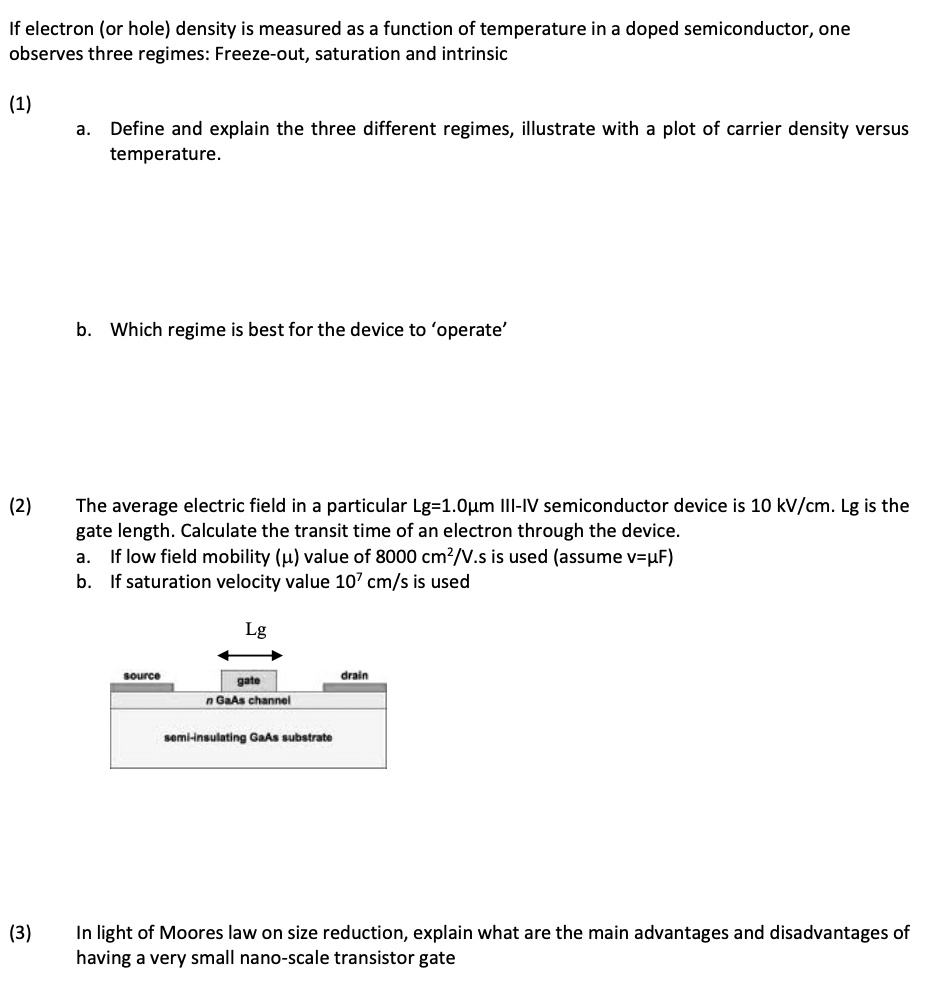
The average electric field in a particular Lg=1.0µm III-IV semiconductor device is 10 kV/cm. Lg is the gate length. Calculate the transit time of an electron through the device.
a. If low field mobility (µ) value of 8000 cm²/V.s is used (assume v=µF)
b. If saturation velocity value $10^7$ cm/s is used
Lg
(3)
source
gate
drain
n GaAs channel
semi-insulating GaAs substrate
In light of Moores law on size reduction, explain what are the main advantages and disadvantages of having a very small nano-scale transistor gate