Astronomy
A. light-year
C. planets
B. meteoroids
D. stars
57.
58 .
59.
60.
Ecology, Pollution, and Energy
A. biodegradable
B. ecology
C. endangered species
D. environment
E. extinct
The distance a beam of light travels in one year.
Large globes of intensely heated gas, generating their own light.
Normally very small solid objects that traverse space and usually are burned up before reaching earth.
Large solid, approximately spherical masses, the most famous of which is earth, which revolve around our sun.
J. nuclear energy
F. food chain
G. geothermal
H. habitat
I. Kinetic energy
K. photosynthesis
L. pollutant
M. recycling
N. smog
O. solar energy
61.
62.
63.
64.
65.
66.
67.
68.
69.
70.
71.
72.
73.
74.
75.
The knowledge or life science that studies how living things depend on each other and their environment.
Any substance that can be decomposed by bacterial action.
Energy produced by or coming from the sun.
Energy in action.
The total surroundings or all the conditions that effect the life and growth of living things.
Heat energy coming from inside the earth. Heat from volcanoes or geysers.
The energy released when atoms are split apart or fused together in atomic reactions.
The place where a community of plants and animals lives; the place where some organism is usually found.
In green plants, putting together food molecules with chlorophyll and the light energy from the sun.
Substance or material that causes pollution.
All the living things of a particular kind so few in number that they a threatened with extinction.
A type of air pollution common around but not limited to cities.
Organisms that once lived on earth but all of their kind have died out; a dead species.
To use again and again; to collect waste materials such as water, glass, cans, and paper, and renew them for use by special processing.
A series of food energy steps from plants to animals to other animals in a community of living things. Food relationships show where organisms get their food; each member on the chain feeds on the preceding link.
Astronomy
A.light-year B.meteoroids
C. planets D.stars The distance a beam of light travels in one year.
57. 58. 59.
earth.
60.
around our sun
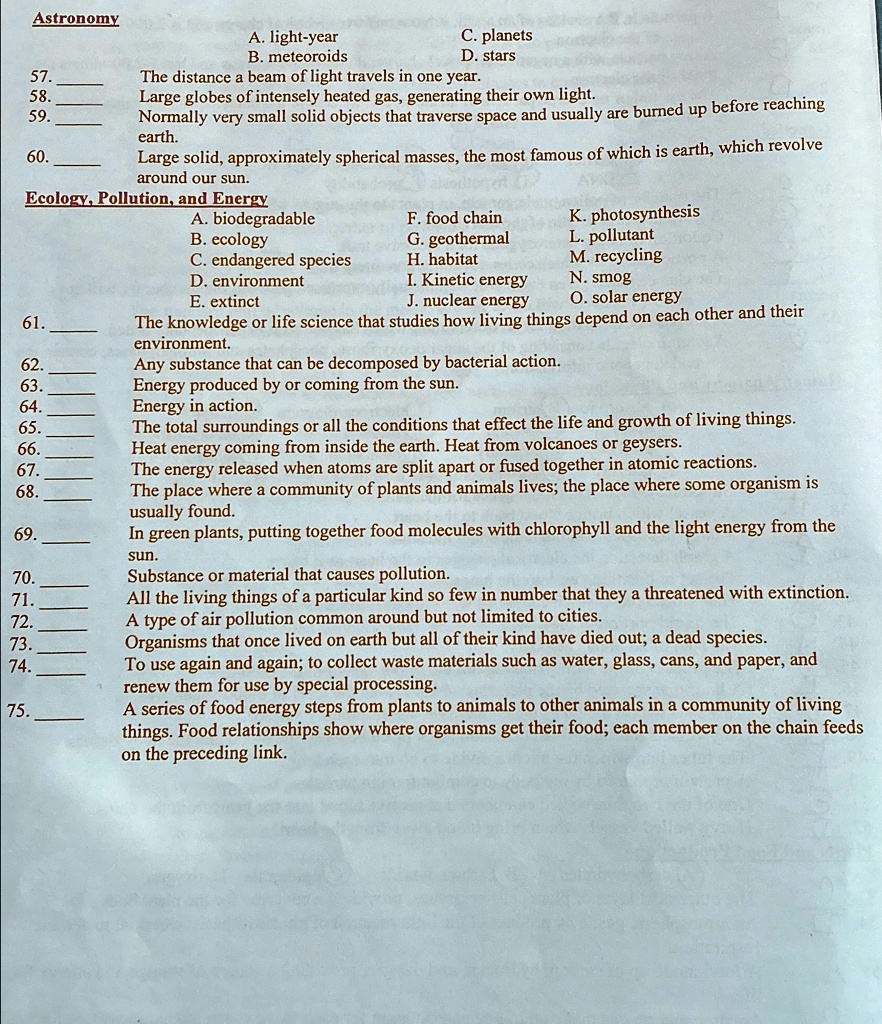
EcologyPollution,and Energy A.biodegradable F.food chain K. photosynthesis B.ecology G. geothermal L.pollutant C.endangered species H.habitat M.recycling D.environment I.Kinetic energy N.smog E.extinct J.nuclear energy O.solar energy 61. environment. 62. Any substance that can be decomposed by bacterial action. 63. Energy produced by or coming from the sun. 64 Energy in action. 65 The total surroundings or all the conditions that effect the life and growth of living things 66 Heat energy coming from inside the earth. Heat from volcanoes or geysers. 67. The energy released when atoms are split apart or fused together in atomic reactions. 68. The place where a community of plants and animals lives; the place where some organism is usually found. 69. In green plants, putting together food molecules with chlorophyll and the light energy from the sun. 70. Substance or material that causes pollution 71. All the living things of a particular kind so few in number that they a threatened with extinction. 72. A type of air pollution common around but not limited to cities. 73. Organisms that once lived on earth but all of their kind have died out; a dead species. 74. To use again and again; to collect waste materials such as water, glass, cans, and paper, and renew them for use by special processing. 75. A series of food energy steps from plants to animals to other animals in a community of living things. Food relationships show where organisms get their food;each member on the chain feeds on the preceding link.