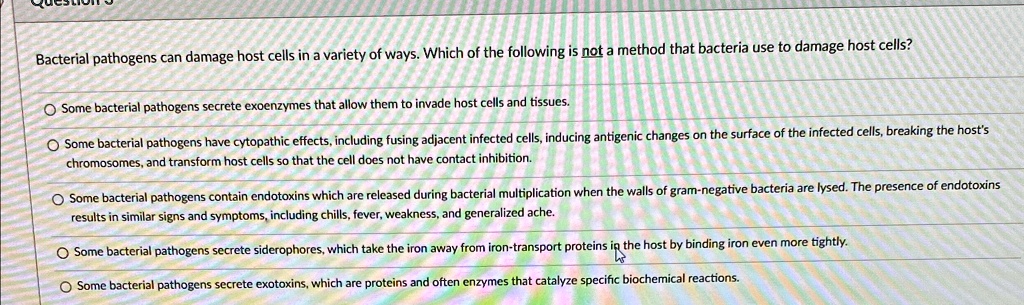
Bacterial pathogens can damage host cells in a variety of ways. Which of the following is not a method that bacteria use to damage host cells?
Some bacterial pathogens secrete exoenzymes that allow them to invade host cells and tissues.
Some bacterial pathogens have cytopathic effects, including fusing adjacent infected cells, inducing antigenic changes on the surface of the infected cells, breaking the host's
chromosomes, and transform host cells so that the cell does not have contact inhibition.
Some bacterial pathogens contain endotoxins which are released during bacterial multiplication when the walls of gram-negative bacteria are lysed. The presence of endotoxins
results in similar signs and symptoms, including chills, fever, weakness, and generalized ache.
Some bacterial pathogens secrete siderophores, which take the iron away from iron-transport proteins in the host by binding iron even more tightly.
Some bacterial pathogens secrete exotoxins, which are proteins and often enzymes that catalyze specific biochemical reactions.