Questions asked
Draw the major organic product of the reaction shown below. OH + $SOCl_2$ $\xrightarrow{pyridine}$ You do not have to consider stereochemistry. You do not have to explicitly draw H atoms.
The nurse would counsel new parents to pursue genetic testing before surgical gender assignment when their child is diagnosed with what condition? A. Epispadias B. Hypospadias C. Cryptorchidism D. Phimosis
How are Tc cells activated? What is their function once activated?
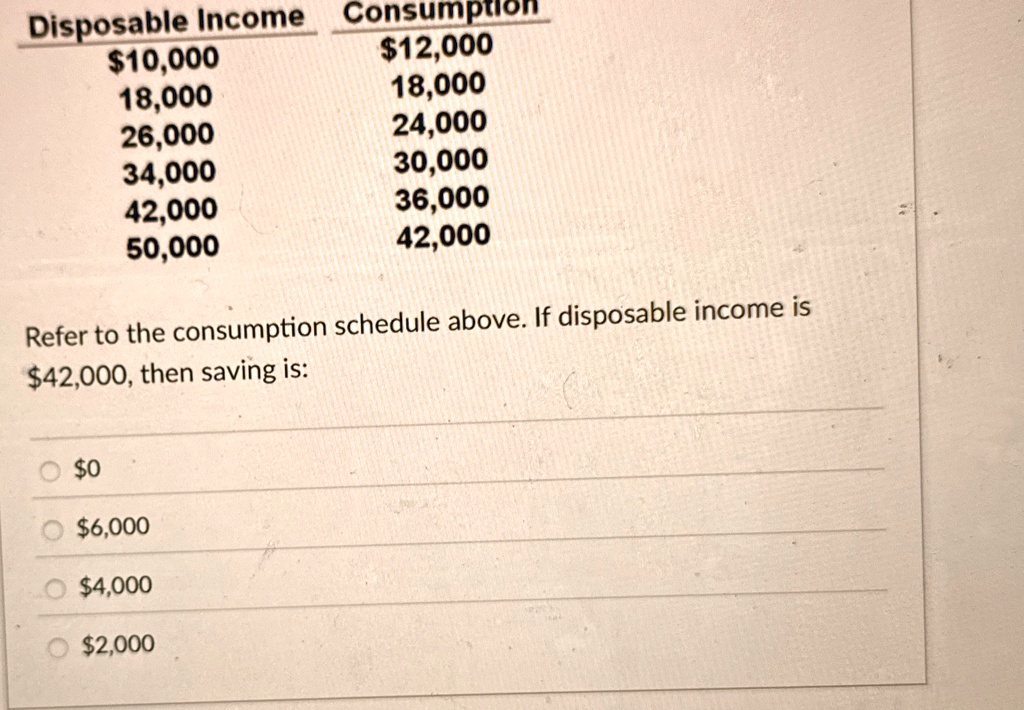
Disposable Income Consumption $10,000 $12,000 18,000 18,000 26,000 24,000 34,000 30,000 42,000 36,000 50,000 42,000 Refer to the consumption schedule above. If disposable income is $42,000, then saving is: $0 $6,000 $4,000 $2,000
A market surveyor wishes to know how many energy drinks adults drink each week. They want to construct a \( 80 \% \) confidence interval for the mean and are assuming that the population standard deviation for the number of energy drinks consumed each week is 0.9 . The study found that for a sample of 271 adults the mean number of energy drinks consumed per week is 7.1. Construct the desired confidence interval. Round your answers to one decimal place.
Part E What type of joint is formed between the radius and ulna? Pivot Hinge Ball and socket Synchondrosis Hints Clear all Check answer
The eyebolt is fastened to a thick base plate, and it supports three steel cables with tensions \( 150 \mathrm{lb}, 350 \mathrm{lbm} \) and 800 lb . Determine the resultant force that acts on the eyebolt by using the vector algebra approach. The unit vectors \( i \) and \( j \) are oriented with the \( x-y \) coordinates as shown. (See Figure)
Find the most general antiderivative F(x) of each function f(x). (a) f(x) = e^{x} + e^{x} (b) f(x) = 3x^{2} \sin x + x^{3} \cos x
Determine the values of the following quantities. (Round your answers to two decimal places.) USE SALT (a) $\chi^2_{0.1, 5}$ 9.24 (b) $\chi^2_{0.1, 30}$ 43.77 (c) $\chi^2_{0.025, 30}$ 46.98 (d) $\chi^2_{0.005, 30}$ 53.67 (e) $\chi^2_{0.95, 30}$ 18.49 (f) $\chi^2_{0.995, 30}$ 14.95 You may need to use the appropriate table in the Appendix of Tables to answer this question. Need Help? Read It
Exercise 9-1 Complete the following proofs using the rules for adding and removing quantifiers where appropriate. (1) 1. \( (x)Fx \lor (x) \sim Gx \) 2. \( \sim (x)Fx \) 3. \( (x)(Dx \supset Gx) \) P P P \( /:. (\exists x)(\sim Dx \lor Gx) \) (2) 1. \( (x)[Ax \lor (Bx \cdot \sim Cx)] \) 2. \( (x)Cx \) P \( p /:. (\exists x)(Dx \supset Ax) \) (3) 1. \( (x)[\sim Ax \lor (Bx \cdot Cx)] \) 2. \( (x)[(Ax \supset Cx) \supset Dx] \) 3. \( (x)(Dx \supset \sim Cx) \) P P \( p /:. (\exists x) \sim Ax \) (4) 1. \( Ab \supset Bc \) 2. \( (x)(Ax \supset Bx) \) 3. \( (x)[(Ax \supset Bx) \supset Ax] \) P P \( p /:. Bc \) (5) 1. \( Ab \lor Bc \) 2. \( (x) \sim Bx \) P \( p /:. (\exists x)Ax \) (6) 1. \( (y)(Ry \supset \sim Gy) \) 2. \( (z)(Bz \lor Gz) \) 3. \( (y)Ry \) P P \( p /:. (y)By \)