Questions asked
How is the integration of personal values and lived experiences worked into ethical public health practice?
a) ()/(9 \sqrt(5)) b) (21 3\sqrt(3))/(56) c) (3\sqrt()5)/(4) d) (27 3\sqrt(5))/(76) a., b. c. d.. QUESTION 7 Simplify the expression in terms of k. \sqrt(-144) a) 12i b) i\sqrt(12) c) 144i d) -12i a.. b.. c. d. QUESTION 8
Baking soda dissolving in water is an example of a Question 26 options: physical change chemical change neither
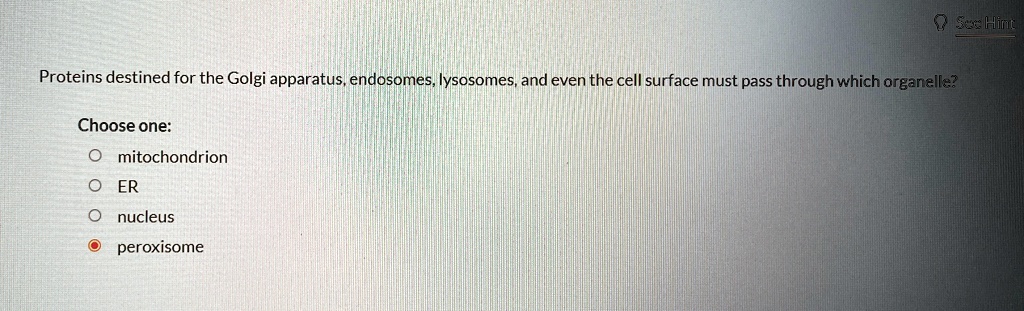
Proteins destined for the Golgi apparatus, endosomes, lysosomes, and even the cell surface must pass through which organelle? Choose one: mitochondrion ER nucleus peroxisome
How does your resource( Innovative Programs Address Inequality in Young Children’s Development) support the development of best practices for engaging families and/or community members in the urban schooling experience?
7.31. A whole life insurance issued to (25) pays a unit benefit at the end of the year of death. Premiums are payable annually to age 65. The benefit premium for the first 10 years is $P_{25}$ followed by an increased level annual benefit premium for the next 30 years. Use your Illustrative Life Table and $i = 0.06$ to find the following. a. The annual benefit premium payable at ages 35 through 64. b. The tenth-year benefit reserve. c. At the end of 10 years the policyholder has the option to continue with the benefit premium $P_{25}$ until age 65 in return for reducing the death benefit to B for death after age 35. Calculate B. d. If the option in (c) is selected, calculate the twentieth-year benefit reserve.
Which is the best nursing intervention to support a hospitalized child's nutrition who is apathetic toward eating? Asking the parent to visit at mealtimes Having a nursing assistant feed the child Providing diversional activity at mealtimes Eliminating the child's between-meal snacks
Body tissues store access food energy two forms which of the following is formed when excess food energy is consumed
The species you are studying all have the following characteristics: a vascular system; produce pollen and seeds; do not generate fruits. To which clade of plants do these species belong? o Bryophytes o Pterophytes o Gymnosperms o Angiosperms
1. Determine the derivative of $y = \cos(3x)$.