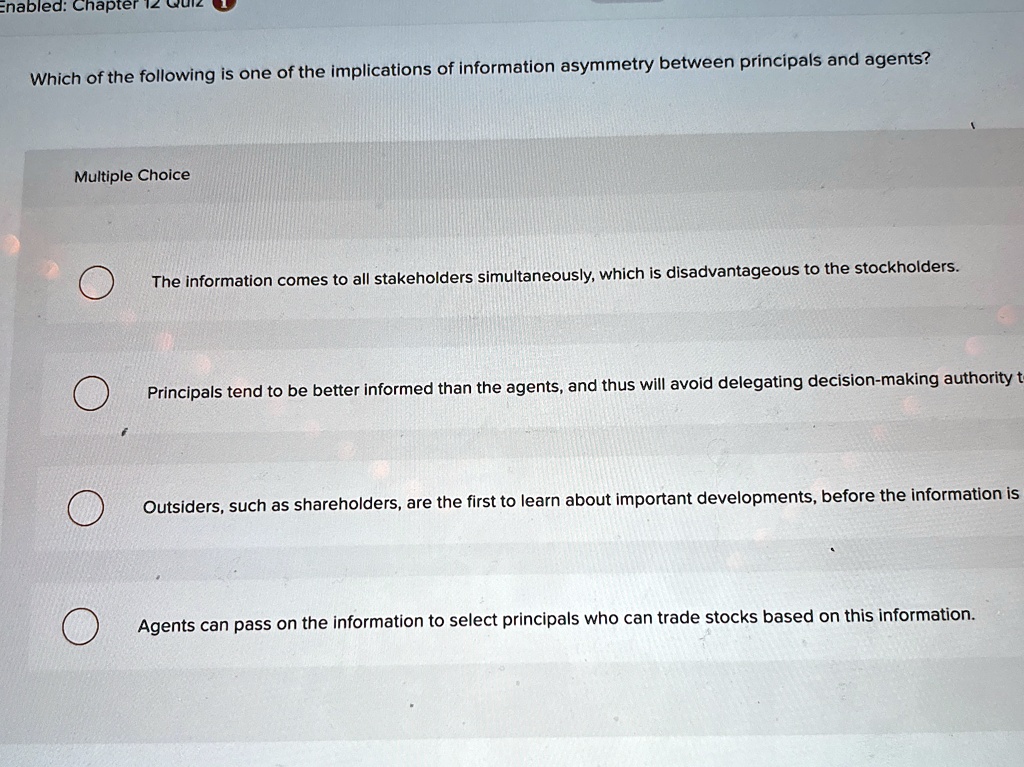
Which of the following is one of the implications of information asymmetry between principals and agents?
Multiple Choice
The information comes to all stakeholders simultaneously, which is disadvantageous to the stockholders.
Principals tend to be better informed than the agents, and thus will avoid delegating decision-making authority to them.
Outsiders, such as shareholders, are the first to learn about important developments, before the information is available to insiders.
Agents can pass on the information to select principals who can trade stocks based on this information.