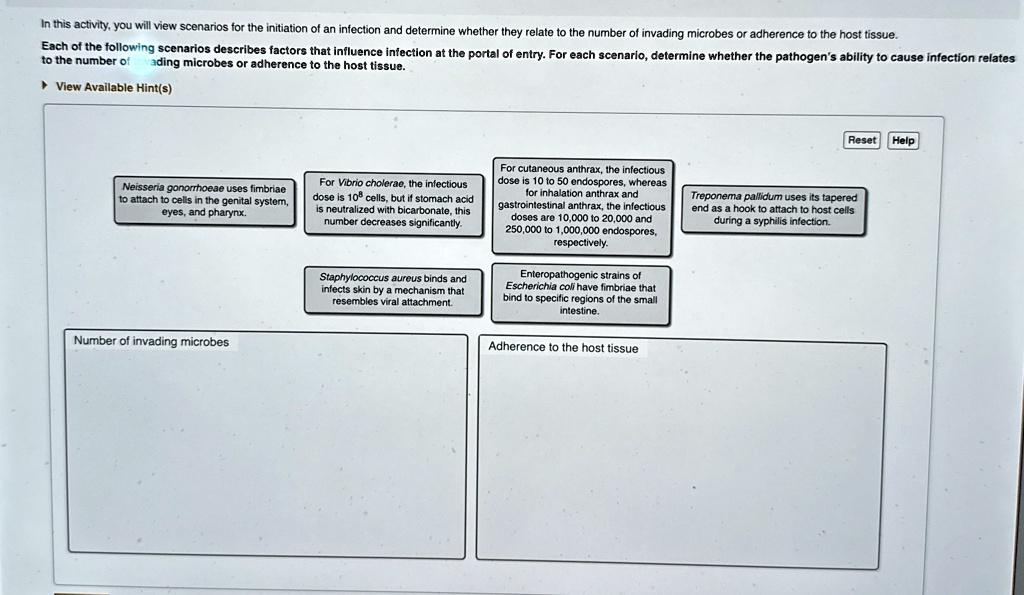
Neisseria gonorrhoeae uses fimbriae to attach to cells in the genital system, eyes, and pharynx.
For Vibrio cholerae, the infectious dose is $10^8$ cells, but if stomach acid is neutralized with bicarbonate, this number decreases significantly.
Staphylococcus aureus binds and infects skin by a mechanism that resembles viral attachment.
For cutaneous anthrax, the infectious dose is 10 to 50 endospores, whereas for inhalation anthrax and gastrointestinal anthrax, the infectious doses are 10,000 to 20,000 and 250,000 to 1,000,000 endospores, respectively.
Enteropathogenic strains of Escherichia coli have fimbriae that bind to specific regions of the small intestine.
Treponema pallidum uses its tapered end as a hook to attach to host cells during a syphilis infection.