Questions asked
At Level 3 of perspective taking, children can see their own and another’s perspective from the view point of a third person. Children typically enter this stage at the ages of ______ years old. Multiple Choice Question 5-9 7-12 10-15 12 and up
From the following, which provides the most conclusive evidence that viruses cause cancers is provided by Question 9 options: A) presence of antibodies against cancer cells in cancer patients. B) The presence of antibodies against viruses in cancer patients. C) Cervical cancer following papillomavirus infections D) Treating cancer with antibodies.
Question 4 Which of the following statements accurately defines periosteum? (A) inner ring of lamellae around osteons (B) found on the bone's exterior and is made of dense irregular connective tissue for strength in all directions (C) contains only osteoblasts for bone deposition (D) made of stratified squamous epithelium for strength in all directions (E) contains only one layer 1 Poin
If the toss of a coin comes down heads, you win a dollar. If it comes down tails, you lose fifty five cents. How much would you expect to gain after 25 tosses?
Question 8 (10 points) Listen If nominal GDP is $24,000 million, and the money supply is $4,000 million, then the velocity of money is equal to a) 6 b) 16.6 c) 0.025 d) 49.6
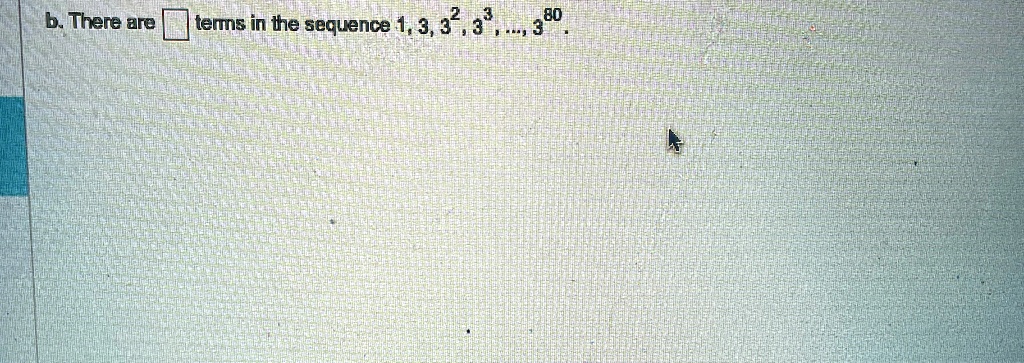
b. There are \boxed{} terms in the sequence $1, 3, 3^2, 3^3, \dots, 3^{80}$.
communication is unrestricted, the system will converge toward a greater cultural uniformity and system will diverge towards diversity when communication is restricte
Students in special education display higher than average _______. a. School dropout rates. b. Graduation rates. c. Employment rates during high school. d. Enrollment in university-level institutions and professional schools.
Use nodal analysis to find $V_o$ in the circuit in Fig. $6\angle 0^\circ V$ $12\angle 0^\circ V$ $1\Omega$ $1\Omega$ $-j1\Omega$ $j2\Omega$ $1\Omega$ $2\angle 0^\circ A$ $V_o$
Question 2 Suppose that the number of bacteria in a culture at time $t$ is given by $N(t) = 5000(25 + te^{-t/20})$. Find the maximum and minimum number of bacteria in the culture during the time interval $0 \le t \le 100$.