Homework Chapter 7
Perpetual Inventory Using LIFO
The following units of a particular item were available for sale during the calendar year:
Jan. 1
Inventory
4,000 units at $20
Apr. 19
Sale
2,500 units
June 30
Purchase
6,000 units at $24
Sept. 2
Sale
4,500 units
Nov. 15
Purchase
1,000 units at $25
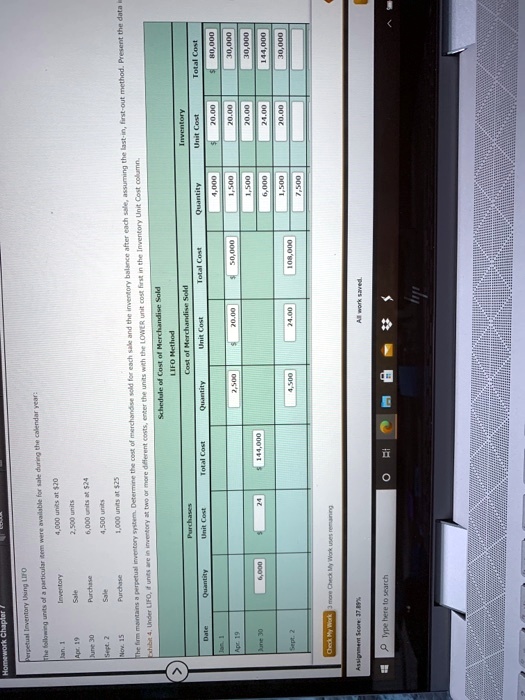
The firm maintains a perpetual inventory system. Determine the cost of merchandise sold for each sale and the inventory balance after each sale, assuming the last-in, first-out method. Present the data in
Exhibit 4. Under LIFO, if units are in inventory at two or more different costs, enter the units with the LOWER unit cost first in the Inventory Unit Cost column.
Schedule of Cost of Merchandise Sold
LIFO Method
Cost of Merchandise Sold
Date
Quantity
Purchases
Unit Cost
Total Cost
Quantity
Inventory
Unit Cost
Total Cost
Quantity
Unit Cost
Total Cost
Jan. 1
Inventory
4,000
20.00
$ 80,000
Apr. 19
2,500
$ 20.00
$50,000
1,500
20.00
30,000
1,500
20.00
30,000
June 30
6,000
24
144,000
6,000
24.00
144,000
1,500
20.00
30,000
Sept. 2
4,500
24.00
108,000
7,500