In a local weekly lottery, tickets cost $2 each.
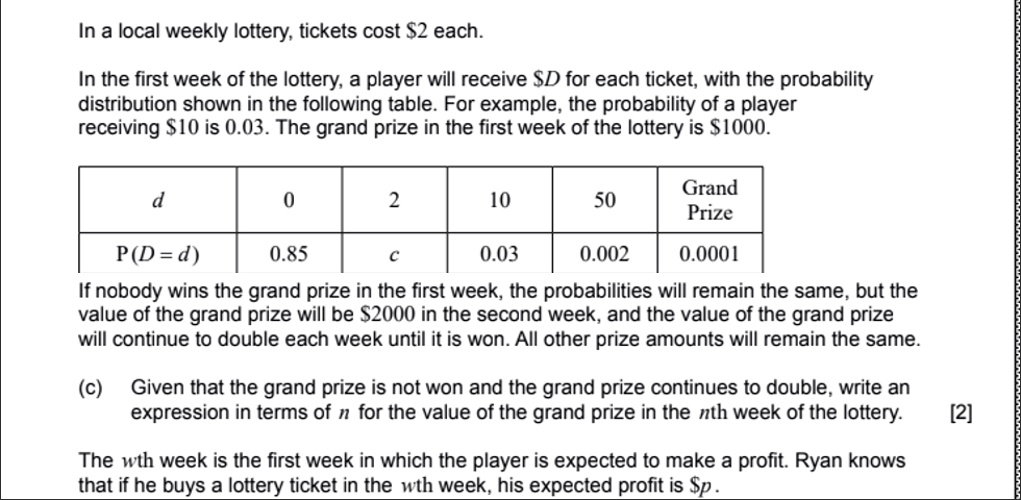
In the first week of the lottery, a player will receive $D for each ticket, with the probability distribution shown in the following table. For example, the probability of a player receiving $10 is 0.03. The grand prize in the first week of the lottery is $1000.
| d | 0 | 2 | 10 | 50 | Grand Prize |
| :--- | :--- | :--- | :--- | :--- | :--- |
| P(D = d) | 0.85 | c | 0.03 | 0.002 | 0.0001 |
If nobody wins the grand prize in the first week, the probabilities will remain the same, but the value of the grand prize will be $2000 in the second week, and the value of the grand prize will continue to double each week until it is won. All other prize amounts will remain the same.
(c) Given that the grand prize is not won and the grand prize continues to double, write an expression in terms of n for the value of the grand prize in the nth week of the lottery. [2]
The wth week is the first week in which the player is expected to make a profit. Ryan knows that if he buys a lottery ticket in the wth week, his expected profit is $p.