Questions asked
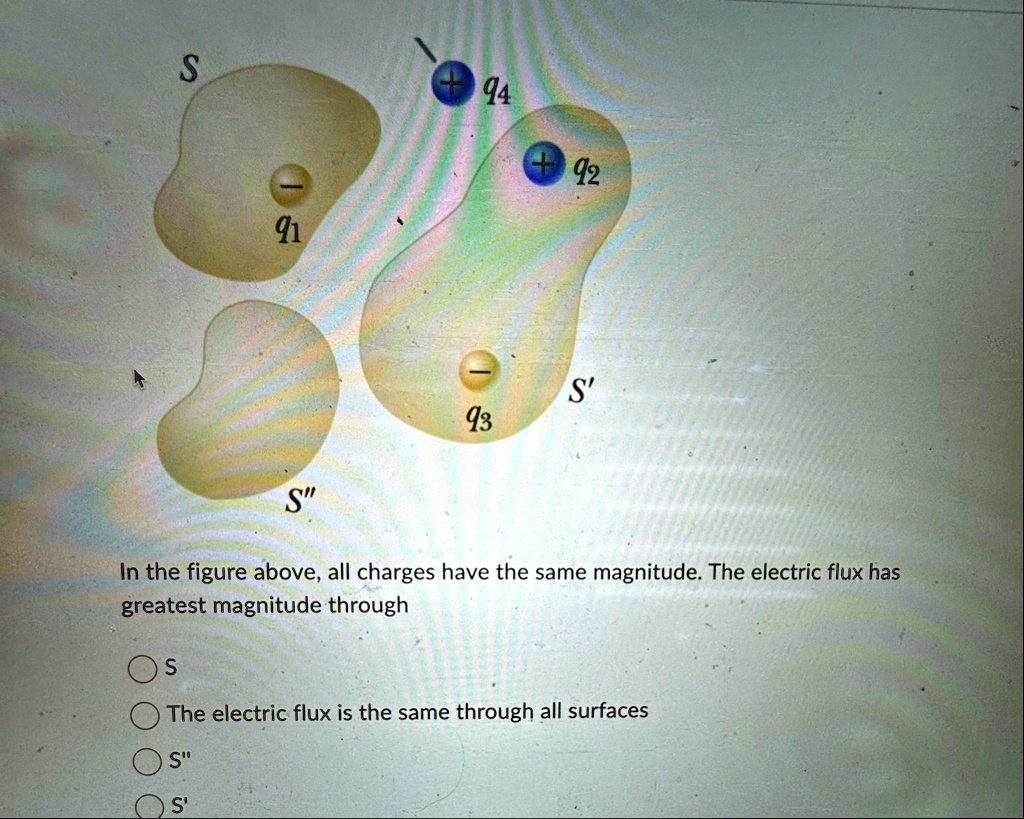
S $$q_4$$ $$q_2$$ $$q_1$$ $$q_3$$ S' S'' In the figure above, all charges have the same magnitude. The electric flux has greatest magnitude through S The electric flux is the same through all surfaces S'' S'
A person immersed in cold water cools____ times faster than in cool air a. 30 b. 20 c. 10 d. 40
Standardizing procedures within each treatment condition a. maximizes differences between groups. b. maximizes variance within treatments. c. minimizes variance within treatments. d. guarantees that there is no systematic relationship between participant characteristics and the treatment conditions.
4. (a) Find the transfer function $I_o(s)/I_s(s)$ for the circuit shown in Figure 4.1 L R $i_s(t)$ ↑ $i_o(t)$ Figure 4.1 R C Suppose $i_s(t) = u(t)$. Find the value of $i_o(t = \infty)$ (12 Marks)
calculate the titration of 50ml of 0.200 M HClO4 and 0.100 M KOH
In the first stages of formation a star is gravitationally contracting. This contraction is stopped when O the star corona ignites due to radiation from a nearby supernova O ionized helium in the core is becoming neutral O the star is starting to \"burn\" iron into silicone in its core O hydrogen in the core is starting to fuse into helium
You are looking at Bacillus subtilis under the 10X objective. Then you switch over to the 40x objective. Under which magnification do the individual bacteria appear larger? 40x 10x
Patient A Rhythm: Heart Rate: P Wave: PR Interval: QRS Interval: T Wave: QT Interval: ST Segment: Patient B Rhythm: Heart Rate: P Wave: PR Interval: QRS Interval: T Wave: QT Interval: ST Segment: Patient A Rhythm: Heart Rate: P Wave: PR Interval: QRS Interval: T Wave: QT Interval: ST Segment: Patient B Rhythm: Heart Rate: P Wave: PR Interval: QRS Interval: T Wave: QT Interval: ST Segment: Focus BE
Two identical positive charges are 2.3 cm apart. They repel each other with a force of 30.7 N. Each charge is how many microcoulombs?
820 ? 680 ? 470 ? 12V