Genetics
To inherit a genetic disorder, both parents must carry the recessive allele. For example, if both parents are heterozygous for a recessive disorder, there is a 25% chance that their child will have the disorder. On the other hand, if one parent has a dominant allele for a disorder, there is a 50% chance that their child will inherit the disorder.
Marfan's syndrome is a genetic disorder that is inherited in an autosomal dominant manner. If one parent has Marfan's syndrome, there is a 50% chance that their child will also have the disorder.
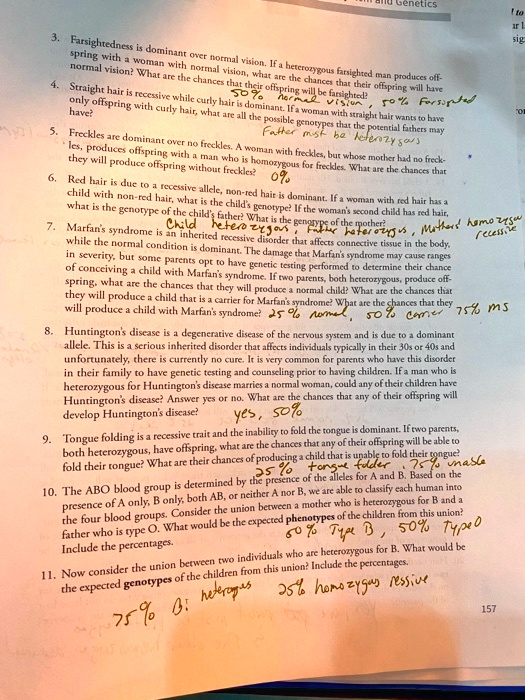
Huntington's disease is a degenerative disease of the nervous system and is caused by a dominant allele. If a man who is heterozygous for Huntington's disease marries a woman who does not carry the allele, their children will not have Huntington's disease. However, there is a 50% chance that their children will be carriers of the allele.
Tongue folding is a recessive trait, while the inability to fold the tongue is dominant. If both parents are heterozygous for tongue folding, there is a 25% chance that their child will not be able to fold their tongue. If one parent is homozygous recessive for tongue folding and the other parent is heterozygous, there is a 50% chance that their child will not be able to fold their tongue.