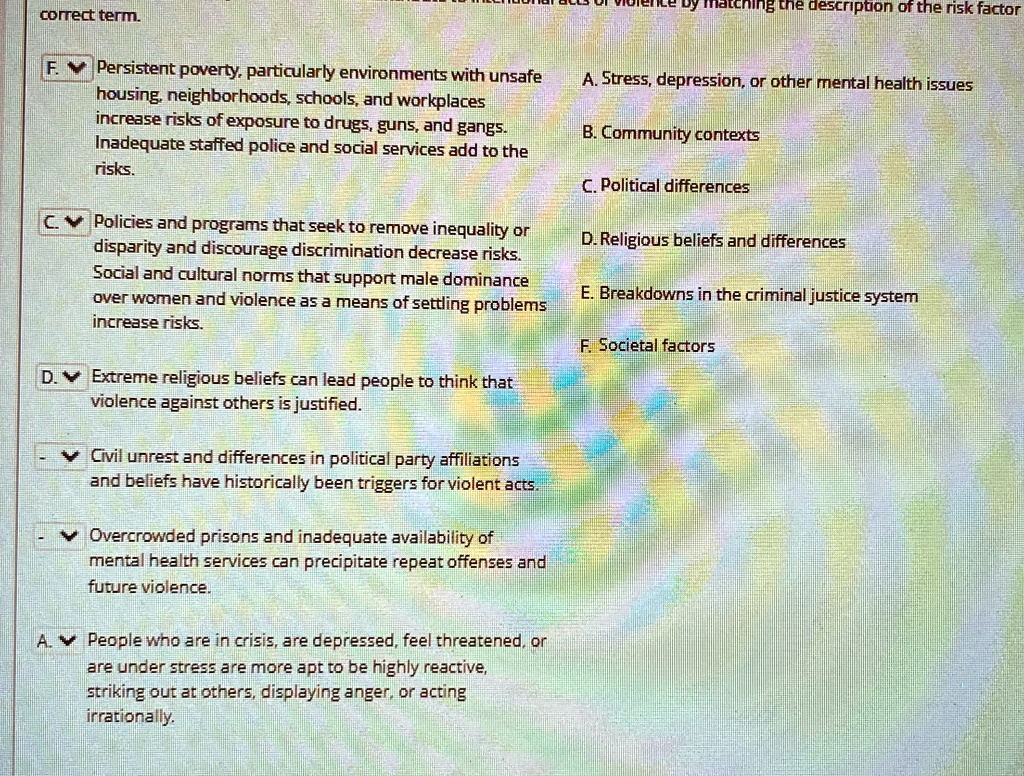
F. Persistent poverty, particularly environments with unsafe
housing, neighborhoods, schools, and workplaces
increase risks of exposure to drugs, guns, and gangs.
Inadequate staffed police and social services add to the
risks.
C. Policies and programs that seek to remove inequality or
disparity and discourage discrimination decrease risks.
Social and cultural norms that support male dominance
over women and violence as a means of settling problems
increase risks.
D. Extreme religious beliefs can lead people to think that
violence against others is justified.
Civil unrest and differences in political party affiliations
and beliefs have historically been triggers for violent acts.
Overcrowded prisons and inadequate availability of
mental health services can precipitate repeat offenses and
future violence.
A. People who are in crisis, are depressed, feel threatened, or
are under stress are more apt to be highly reactive,
striking out at others, displaying anger, or acting
irrationally.
A. Stress, depression, or other mental health issues
B. Community contexts
C. Political differences
D. Religious beliefs and differences
E. Breakdowns in the criminal justice system
F. Societal factors